

Süslü Collection: Handcrafted Pieces for Special Days
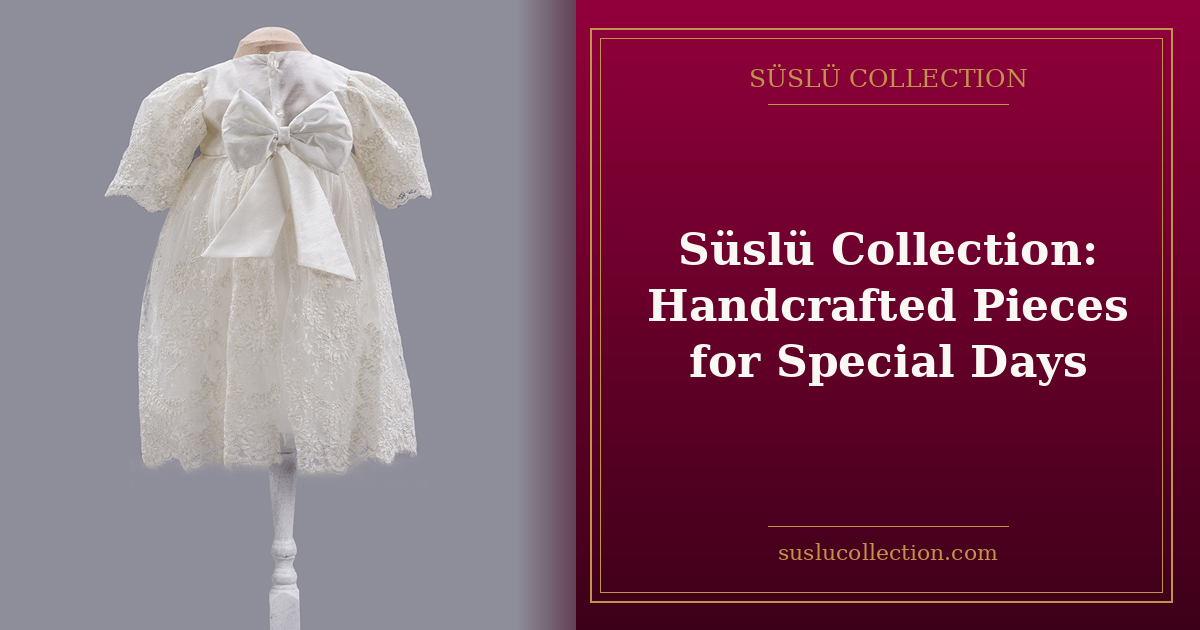
What is Süslü Collection? Short answer: a family brand making handcrafted pieces for special days — from christening outfits to flower girl dresses, from keepsake boxes to table décor; it works through its Bakırköy and Fatih stores and online. 🤍
This guide gathers the five things that define the brand, the collection headings, the custom order process, the store experience and what handwork means; each topic’s deep dive is linked along the way.
Let’s say it upfront: our work isn’t selling clothes but turning a day into a keepsake — which is why measurements, fabric and embroidery are discussed one by one. ✨
The brand’s own words: about us · all products: collections.
Five things that define the brand
The list set out five headings; this section opens each. They meet in one sentence: for special days, by hand, to measure. 🧵
These five also tell you what to look for when choosing a piece.
What does handwork mean here?
Most pieces are prepared one by one in the atelier: fabric is cut by hand, lace and embroidery placed by hand. No two pieces are exactly identical; the small differences are handwork’s signature. Detail in the why handmade piece.
What does being a family business change?
Süslü Collection is a family company run through the Malhatun family’s partnership; alongside trading in jewellery and accessories it sells Süslü Malhatun’s handmade products. The people who decide and the people who deliver are the same team.
Why do the two stores matter?
The traditional retail experience of the Bakırköy and Fatih stores carried over into e-commerce: customers who want to see a fabric’s tone in hand come to the store, those short on time order online. The store side is in the stores piece.
Which days do we prepare for?
Christenings, birthdays, mevlid gatherings, Eid, weddings and engagements: the most photographed days of the year. Products are designed to the rhythm of those days.
How far does personalisation go?
Measurements, colour, fabric, trim and name-and-date embroidery: a different solution is possible for every child outside the standard size chart. The process is in the custom order piece.
Where does the name come from?
“Süslü” comes from Süslü Malhatun, the name behind the family’s handmade pieces; “collection” describes the whole they form together.
Who do we make for?
Mostly babies and children: christenings, birthdays, mevlid and wedding days. Alongside them, the ceremony pieces a family needs — from table décor to a bridal hat.
The definition is set. Now the collections. 👗
Collections: six headings
The list set out the headings; this section says who each collection serves. All are built the same way: one special day, one product family for it. 🎀
The collections complete each other: in a christening order the gown, towel, candle and keepsake box all speak one language.
What’s in the christening collection?
Gowns and suits for baby girls and boys, bonnets, ceremony towels, candles and storage boxes. Outfit choice is in the christening outfit guide.
Flower girl and bridal dresses?
Flower girl and junior bridesmaid dresses, models by age group, tiaras and hair accessories. Guide in the flower girl dress piece.
Occasion dresses?
Birthday, mevlid, Eid and wedding-guest dresses; sequin, bow, lace and plaid models. Guide in the occasion dress piece.
Keepsake boxes?
Velvet, satin and quilted lidded boxes: they carry ceremony pieces and then keep them for years. Guide in the keepsake box piece.
Organisation décor?
Table cloths, runners, candle holders, napkin rings and tulle: the parts of engagement and henna tables. Setup in the table decoration piece.
Hats and veils?
Bridal hats, wedding caps and veils: the finishing pieces of civil ceremonies and photo shoots. Detail in the hat and veil piece.
How are collections used together?
With one colour language: the lace on a gown can repeat on a keepsake box lid and in the same tone as the table cloth. All of it in the collections piece.
The collections are introduced. Next, production. 🪡
How a piece is born
The strip drew five stops; this section explains what happens at each. The rule: every stop locks something in — no surprises at the end. 🚉
Ready-made pieces use the first and last stop only; custom orders run through all five.
How is a brief sent?
In one message: the ceremony date, the child’s age, three measurements (height, chest, waist), colour and wishes. A photo you like can be added too.
What does the proposal include?
Model, fabric and trim options in writing, with price and timing: a written quote protects both sides better than a verbal agreement.
Why is approval so important?
Once fabric is cut and embroidery stitched, going back is hard: names are read letter by letter, measurements confirmed centimetre by centimetre.
What happens in production?
Pattern, cutting, sewing, lace and embroidery work: every stage is done by hand in the atelier. The process is in the production piece.
What is the final check?
The finished piece is photographed in daylight and sent once you approve; the box doesn’t leave before that.
Can I ask for a sample or photo?
You can: a fabric sample and a close-up daylight photo are the safest way to decide colour from a distance. A tone on screen and a tone in hand are rarely the same.
Production explained. Next, the stores. 🏬
Store and online: two channels
Süslü Collection works through two channels: the Bakırköy and Fatih stores and online sales. This section says which suits whom. 🛍️
They aren’t alternatives but complements.
When is the store better?
When a fabric’s tone and texture need to be seen in hand: satin, velvet and tulle look one way on a screen and another in daylight. A colour decision takes ten minutes in store.
When is online better?
For customers outside Istanbul and those short on time: product photos, the size chart and advice by message usually settle the order.
How are the two combined?
Visiting once to choose the fabric and ordering online afterwards is the most common route.
Where are the addresses and hours?
Current addresses and opening hours are on the contact page; the store experience is in the stores piece.
Do you ship abroad?
For families abroad, shipping time and customs are added to the calendar: custom orders need planning three to four weeks ahead.
Is advice charged for?
No: questions about models, fabrics and measurements are answered free of charge. With the ceremony date and measurements in hand, a proposal comes the same day.
The channels are explained. Next, timings. 📦
Orders, shipping and timings
The three things asked most in special-day shopping are timing, shipping and exchange. This section answers all three plainly. 📦
The general rule: write the date in your first message and the rest is easy.
How long does a ready-made piece take?
Items in stock usually reach you within a week: order, preparation and shipping. Planning for it to be home a week before the ceremony is safest.
How long does a custom piece take?
Three to four weeks on average: measurement and design approval, production in the atelier, photo check and shipping. In Eid and wedding season, add a week of buffer.
How do exchange and returns work?
For ready-made pieces, the conditions are stated on the product page and in the distance sales agreement. Pieces sewn and embroidered to order are made for you, so the scope for return is limited — which is why the approval stage is done in detail.
Are rush orders possible?
Write the date in your first message and you’ll get an honest answer: sometimes a ready model, sometimes a simpler embroidery is the fastest route.
How do you avoid measurement mistakes?
Take the three measurements (height, chest, waist) fresh and dated before ordering, and choose the larger of two sizes. Method in the order piece.
Timings are clear. Next, quality. 🔍
Quality: where to look
Handwork isn’t a claim but something you can see: stitching, lining, edges and trims. This section says where it shows. 🧐
These four signs apply to any special-day piece, not only ours.
What to look for in stitching?
Straight, close stitching with thread ends trimmed: turn a piece inside out and its real age becomes clear.
Why is lining critical?
It is the layer touching the skin: cotton lining is non-negotiable in baby and children’s pieces. Lace and tulle should never sit directly against skin.
What about edge finishes?
Lace and tulle edges must be finished; a raw cut edge frays after a few wears.
How durable are the trims?
Pearls, stones and sequins should be stitched one by one: glued trims come off in the first wash. Why handwork matters is in that piece.
What should a product page state?
Fabric content, lining information, measurements in centimetres and care advice: if all four are written, the seller takes the work seriously.
Any extra check for baby items?
Small parts: stones, beads and buttons must be firmly stitched and the underarm and neckline smooth. For under-ones this check is standard.
The quality signs are given. Next, care. 🧺
Care: keeping a piece for years
A handmade piece lasts longer with the right care. This section gives four short rules. 🧺
They’re simple; skipped, the finest fabric tires within a season.
Washing rule?
Lace, tulle and satin by hand in cold water with a mild detergent; velvet and silk shantung to dry cleaning. Cotton pieces at 30 degrees, turned inside out.
Ironing rule?
Inside out at low heat with a thin cloth between: tulle melts at high heat, velvet isn’t ironed but refreshed with steam.
Storage rule?
Somewhere dark, dry and breathable, with acid-free paper: a plastic bag traps moisture and yellows white fabric. Detail in the storage piece.
Stain rule?
Immediately, with cold water and without rubbing: sugar and milk stains yellow over time. Unknown stains go to professional cleaning.
Who repairs a piece?
You can write to our atelier for small repairs and alterations: even years later, a lace seam can be renewed.
Care explained. Last section: the brand story. 📖
From the counter to the screen
The brand’s story begins at a shop counter: years of face-to-face selling, then the same experience carried online. This section tells that road briefly. 🏛️
The channel changed; taking measurements, choosing fabric and working by hand stayed the same.
What did the store teach?
How to know a customer: which worry sits behind which question, what a mother is really asking when she says “will it itch?”
What did e-commerce change?
Distance: orders now come from outside Istanbul and from abroad. That required clearer product pages and more precise measurements.
What didn’t change?
The atelier: pattern, cutting, sewing and embroidery are still done by hand. The whole story is in the brand story piece.
What comes next?
More personalisation and clearer writing: putting the work behind each piece, and its care information, into words.
Where to begin?
Write your need, the date and the measurements via contact — a proposal the same day; products in collections, and the brand’s own words on the about us page.
The guide is complete: definition, collections, production, channels, timings, quality, care, story. Summary below. 🎀
🧵 Notes from the Atelier
The sentence we hear most is “I saw something like it online but I don’t know how it feels in hand” — which is why sending fabric samples and shooting in daylight became habits. Second note: where the embroidery draft is proof-read by two people, we never see a spelling mistake. Third note: customers who visit once to choose a fabric order comfortably online afterwards.
📖 Quick Glossary
Handwork: cutting, sewing and trimming done by hand. Personalisation: measurements, colour and embroidery set by the order. Keepsake box (hurç): a lidded box that stores ceremony pieces. Veil: a fine tulle accessory covering the face or hair.
⚡ Quick Summary
Süslü Collection is a family brand making handcrafted pieces for special days. 🤍 Six collection headings: christening, flower girl and bridal, occasion dresses, keepsake boxes, organisation décor, hats and veils. A custom order runs through five stops: brief, proposal, approval, production, photo check. The Bakırköy and Fatih stores work alongside online sales. Quality shows in stitching, lining, edge finishes and the firmness of trims.
🎯 Next Step
Write your need, the date and the measurements via contact — a proposal the same day; products in collections.
Sıkça Sorulan Sorular
What is Süslü Collection?
It is a family brand making handcrafted pieces for special days: christening outfits, flower girl and occasion dresses for girls, keepsake boxes, organisation décor, hats and veils. It sells through its Bakırköy and Fatih stores and online.
Does Süslü Collection have physical stores?
Yes. There are stores in Bakırköy and Fatih, and the same products are sold online. Current addresses and opening hours are on the contact page.
Can I place a custom order?
You can. Measurements, colour, fabric, trim and name-and-date embroidery are set by your order. The process runs through five stops: brief, written proposal, design and measurement approval, production in the atelier, and a photo check before shipping.
Kaynak: Wikipedia — Handicraft
About Süslü Collection
Browse Products


