

Girls’ Occasion Dresses: From Tailoring to the Event
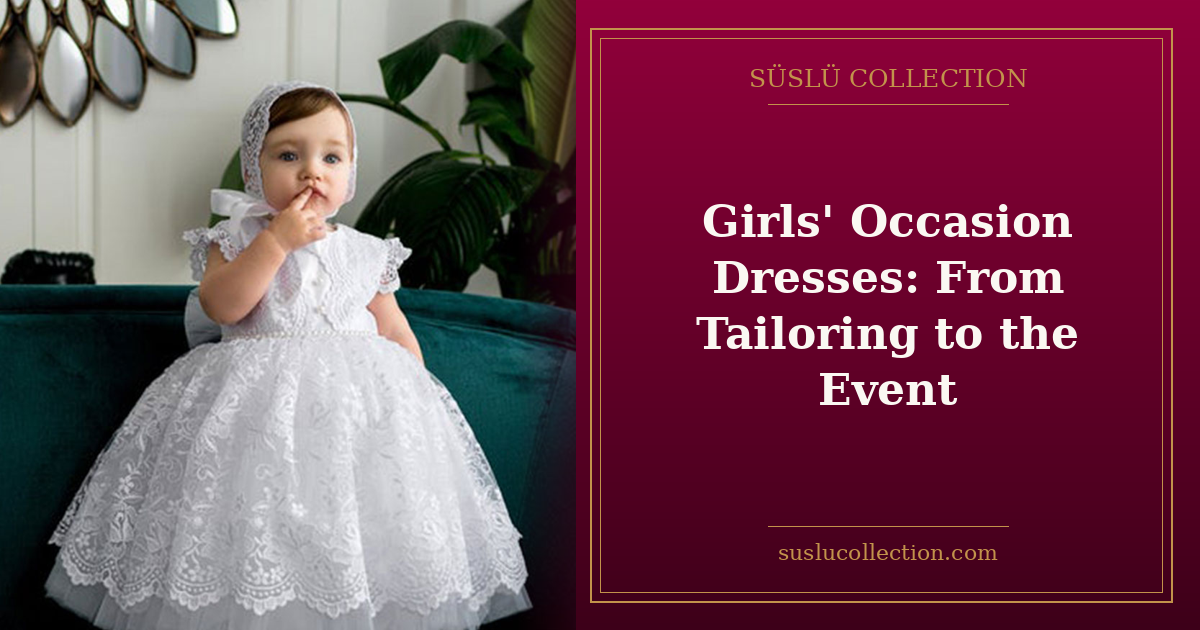
How do you choose a girl’s special occasion dress? Short answer: read the occasion first, then the child — birthday, mevlid, Eid, wedding and engagement speak five different dress languages; age, fabric and a single sparkle focus complete that language. 🎀
This guide gathers the five occasions, the age steps, fabric choice, trim dose, measuring and the custom-versus-ready decision into one path; each topic’s deep dive is linked along the way.
Let’s say it upfront: a well-chosen occasion dress is comfortable first, elegant second — when a child forgets her dress, the photo takes care of itself. ✨
For the bridal and flower girl side: flower girl dress guide · the atelier’s approach: custom or ready-made.
The five-step path, in order
The strip drew the path; this section opens each step. The logic is simple: each step narrows the next — the occasion sets the cut, age sets the comfort, season sets the fabric; the sparkle focus sets the trim and the measurements lock the order. 🧭
Families who follow the order tell us the same thing: no surprises on the morning of the event, no last-minute rush.
Why does the occasion come first?
Because the same dress sends two different messages at two events: a sequinned skirt that looks joyful at a birthday is too much at a mevlid. Choosing before reading the occasion takes a good dress to the wrong place.
What does the age step change?
Cut and comfort: a one-year-old lives in arms, a five-year-old runs, a ten-year-old voices her own opinion — the same model gives three different results at three ages.
Why tie fabric to the season?
Children feel heat and cold faster than adults: velvet overwhelms in August, thin tulle chills in December. Seasonal fabric is the invisible half of comfort.
What does “one sparkle focus” mean?
Sequins, bows, lace, stones — all lovely, but not all at once: one focus is chosen and the rest stays quiet. The camera rests on one focus and wanders among many.
Who should be part of the decision?
From about seven, the child herself: a girl who helped choose wears her dress all day with pride. Offer two or three options you already approve of, then let her pick.
The path is drawn. Now the five occasion languages. 🎉
Five occasions, five dress languages
The list lined up the occasions; this section gives each one’s rule. They share a single question: whose day is it? At a birthday the child, at a mevlid remembrance, at a wedding the bride — the dress adjusts its volume to the day’s owner. 🎈
The rule isn’t rote, it’s courtesy: a dress that respects the day’s owner is always the right dress.
What does a birthday dress need?
Movement: cake, games, dancing, opening presents — the skirt should twirl, the waist shouldn’t pinch, colour is free. Age-by-age choice in the birthday dress guide, the first birthday in the baby birthday piece.
Why is a mevlid dress a separate language?
Because the day’s tone is respect: a mevlid is a gathering of prayer and remembrance in Turkish homes and mosques. Covered shoulders, below-knee length, quiet colours and silent trim — sequins and shiny satin rest. Details in the mevlid dress piece.
How is an Eid dress chosen?
By season and visiting traffic: a child going house to house all day needs a dress that is smart yet never tiring — calendar and age notes in the Eid dress piece.
What does a girl wear as a wedding guest?
A colour away from white: white is the bride’s language; pastel, blush, navy and burgundy suit a guest. If she has a flower girl role the rules change — that side lives in the flower girl guide. The guest side is in the wedding guest piece.
Engagement and henna night?
The henna night brings its own colours — red, purple and yellow tones run free; an engagement is the wedding’s half dose: smart but simple.
Two occasions in the same week?
Choose one dress with a simple body: worn with a colourful sash and a bright hairband at the birthday, with a cardigan and plain shoes at the mevlid — the language changes with the accessories, the dress stays the same.
The occasions are read. Next come the age steps. 👧
Age steps: 1 year, 2-6, 7-12
A dress is cut for a child’s body and temperament. Three steps make the job easier: the in-arms age, the play age, the threshold age — each with its own silhouette, fabric and trim dose. 🪜
The steps aren’t hard borders, they point the way: the child’s temperament has the final word.
One year: the in-arms age
A baby spends most of the day in arms and on the floor: soft cotton lining, flat seams, a skirt that leaves the nappy free, snaps or buttons at the back. No stones or hard sequins — they scratch the one holding her and end up in her mouth. Details in the baby birthday piece.
2-6 years: the play age
The age that loves a full skirt most: she twirls in front of the mirror and runs in the garden. Volume should come from layers of tulle, never from stiff wire; the play test is this age’s compulsory exam.
7-12 years: the threshold age
A step toward young womanhood: volume calms down, the A-line and a sash come forward, and her own taste joins in. Choosing together is essential at this age — she won’t wear a dress she doesn’t like.
What is the play test?
Three moves, two minutes: run, sit, hug. Does the skirt leave her stride free, does anything poke when she sits, does the sleeve pull when she hugs? If all three pass, the dress is ready for the event.
What if a child sits between two steps?
Temperament decides: a shy six-year-old may love the calmer A-line, a bold eight-year-old may ask for one more princess season. The steps guide, the child decides.
The steps are set. Now the fabric. 🧵
Fabric: season, drape and touch
The fabric decision answers three questions: which season, what kind of drape, what touches the skin? The right fabric looks good in the photo and still feels good in hour eight. 🌿
The general rule: the outer fabric carries the look, the lining carries the comfort — if the lining is poor, the dress itches however beautiful the outside.
When is silk shantung chosen?
When structure is wanted: a lightly lustrous, textured fabric that holds its own shape — an elegant choice for a mevlid, an engagement or Eid. The comparison is in the fabric guide.
Why does velvet lead in winter?
It keeps warm and reflects light softly: burgundy, navy and emerald velvet are winter-occasion classics; together with plaid they are the two pillars of the winter wardrobe — the plaid side in the plaid piece.
What do tulle and lace carry?
Volume and delicacy: layers of tulle give fullness, lace gives detail — neither should touch the skin; a cotton lining goes underneath. The story of French lace is in the lace piece.
Why is cotton lining non-negotiable?
Because it’s the only layer that touches the skin: it absorbs sweat in summer and cuts synthetic static in winter. If a product page doesn’t mention the lining, ask.
What about linen blends?
A natural smartness for summer garden events: cool and matte. Pure linen creases quickly, so a cotton or viscose blend is more practical on a child.
The fabric is chosen. Next, the trim dose. ✨
Trim dose: sequins, bow, lace — which one?
Trim is where occasion dresses go wrong most often: putting every beautiful thing on the same dress. The one-sparkle-focus rule solves it — one star, the rest is stage. 💫
The choice follows the occasion: sequins at a birthday, a bow at a wedding, lace at a mevlid are the most natural pairings.
When is a sequin dress right?
At evening birthdays and New Year’s parties: it sparkles under lights and comes alive in photos. Sequins must be separated from the skin by a lining and kept away from the underarm — the reverse side scratches. The dose is in the sequin dress piece.
Where should a bow sit?
At the waist or the back: a big back bow is a wedding and engagement photo classic; a small collar bow is Eid smartness. Models in the bow dress piece.
Why is lace timeless?
Because it doesn’t shine, it speaks: handcraft shows up close, and the photo doesn’t age years later. The safest trim for a mevlid and for events with elders present.
Do accessories count toward the trim?
Yes: tiaras, hairbands and shoe buckles count as focus too. If the dress is sequinned, the hairband stays plain — the total dose is what’s counted.
What about embroidery?
Embroidery is lace’s quiet cousin: a few flowers at the collar or hem add handcraft without shine — ideal when a family wants detail at a respectful occasion.
The dose is set. Now the measurements. 📏
Measuring: three numbers, one allowance
The size label finds the rack, the centimetres choose the dress: “age 6” is a factory average, not your child. Three measurements close that gap. 📐
Use a soft tape, measure over thin underwear, and write the numbers down with the date.
Which three measurements?
Height (against a wall, without shoes), chest (at the widest point, one finger of room between tape and skin), waist (at the natural crease, without pinching). Skirt length is written on its own line.
What if she’s between two sizes?
Always the larger size: extra room can be managed with a sash or a small dart, while tightness has no fix on the day.
When should you measure?
Right before ordering: children grow fast, and a two-month-old number describes a different child. For custom-made dresses the measurements are taken at the start of the sewing window.
Do shoes count too?
They do: new shoes aren’t worn for the first time on the day — two evenings at home break them in; no heels, non-slip soles. For winter events, try them with thick tights.
Who confirms the size?
The atelier: send the three numbers and the event date via contact, and a named size confirmation comes back the same day; the centimetre charts are on the product pages in the girls’ dresses collection.
The numbers are in. Now the big decision. ⚖️
Custom-made or ready-made?
The table set the two options side by side honestly; the decision comes down to one question: is stock enough for this child and this occasion? Most of the time it is — there are three situations where it isn’t. 🪡
Custom isn’t “better”, it’s “exact”: not everyone needs it, and when it’s needed nothing else takes its place.
Which three situations call for custom?
A body that falls outside the size chart (very tall-slim, short-sturdy), a family-specific fabric or colour request (like mother-daughter matching) and name-and-date embroidery. The full comparison is in the custom or ready-made piece.
How long is the sewing window?
Three to four weeks: measurements, fabric approval, sewing, photo check, shipping. A ready-made dress arrives within a week. Either way the box should be home a week before the event.
Is there a middle path?
There is: a stock dress plus a small alteration or embroidery — most of the personality, a fraction of the time.
Where does mother-daughter matching fit?
In custom-making’s best-loved territory: the same fabric in two sizes and two cuts — details in the mother-daughter piece.
Does a busy season change the timing?
It does: before Eid and in wedding season (May to September) ateliers and couriers slow together — add a week to every window.
The decision is made. Last section: the dress’s second invitation. 🔁
One dress, several occasions
A good occasion dress doesn’t fit into a single day: by translating the accessories it can travel from birthday to Eid, from engagement to mevlid. This section explains the translation. 🔄
The formula: simple body + changing accessories = several occasions.
How does accessory translation work?
The same simple shantung dress: at a birthday with a sparkly hairband and a colourful sash, at a mevlid with a cardigan and plain flats, at Eid with a velvet bolero — three occasions, one dress.
Which dresses translate well?
Solid-coloured, medium-volume, classic cuts: sequinned or heavily patterned dresses have character but speak a single language.
Can it pass to a younger sister?
With good fabric and a generous seam allowance, yes: a roomy cut, a hem that can be let down, careful storage. Storage basics are in our storage piece.
Where should the budget go?
Into the body, not the trim: a good fabric and a cotton lining serve every occasion, while trims can be swapped cheaply from event to event.
What to do now?
One message: occasion, date, the child’s age and three measurements — write via contact and get a recommendation and an honest calendar the same day. Models are in the girls’ dresses and the full dresses collections.
The guide is complete: occasion, age, fabric, trim, measuring, custom, translation. Summary below. 🎀
🧵 Notes from the Atelier
The message we receive most isn’t “which dress is pretty?” but “which dress suits this occasion?” — and the answer always comes from the day’s owner. Second note: families who run the play test at home write that on the day “she never once thought about the dress”; a forgotten dress is the right dress. Third note: accessory translation works best for the Eid-mevlid pair — one dress, two respectful days.
📖 Quick Glossary
Occasion language: the dress’s volume set by the day’s owner. Age step: 1 year in-arms, 2-6 play, 7-12 threshold. One sparkle focus: only one of sequins, bow or lace leads. Play test: run, sit, hug. Accessory translation: carrying a simple body to different occasions. Mevlid: a Turkish gathering of prayer and remembrance.
⚡ Quick Summary
Five steps: read the occasion (birthday, mevlid, Eid, wedding, engagement-henna), choose the age step, tie fabric to season, set one sparkle focus, lock the measurements. 🎀 White belongs to the bride; a guest girl wears pastel or a rich tone. Between two sizes, go larger. Custom-made is needed in three cases — an off-chart body, family-specific fabric, embroidery — and takes 3-4 weeks; ready-made takes a week. A simple-bodied dress travels to several occasions with accessories.
🎯 Next Step
Write the occasion, date, age and three measurements via contact — a recommendation and calendar the same day; models in the girls’ dresses collection.
Sıkça Sorulan Sorular
How do you choose a girl’s special occasion dress?
In five steps: first read the occasion’s language (a birthday needs movement, a mevlid respect, a wedding a colour away from white), then choose the age step (1 year in-arms, 2-6 play, 7-12 threshold), tie the fabric to the season, set a single sparkle focus and take height, chest and waist measurements right before ordering.
Can a girl wear white as a wedding guest?
The general rule is no: white is the bride’s colour. For a guest child, pastel, blush, navy or burgundy are better choices. If she has a flower girl or bridesmaid role and the bride wishes it, white can be worn — then the flower girl guide’s rules apply.
How long does a custom-made girl’s dress take?
On average three to four weeks, through measuring, fabric approval, sewing, a photo check and shipping. A ready-made (stock) dress arrives within a week. In both cases the dress should be at home at least a week before the event.
Kaynak: Wikipedia — Dress
Girls' Occasion Dresses
Browse Products


