

Wedding Hats by Season: The Wheel of Fabric, Tone and Timing
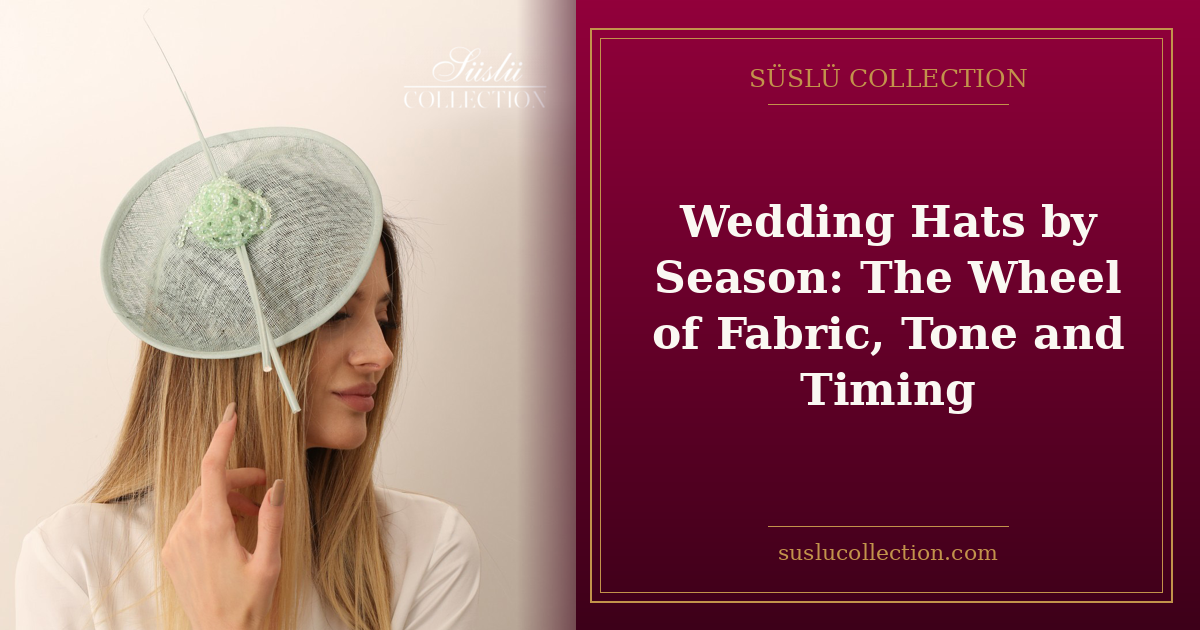
The same hat that glows in June photographs heavy in November — why? Because millinery keeps seasons the way fashion keeps years. 🍂
Season decides three things before style even speaks: fabric, tone and logistics — what breathes, what matches the light, and how booked the ateliers are.
This guide spins the season wheel quarter by quarter, briefs the two extreme heads — summer and winter — and closes with the calendar play that beats the rush. ✨
Main guide: the wedding hat guide · the timeline: where to buy.
The season wheel, quarter by quarter
The wheel above is millinery’s farming calendar; here is why each quarter grows what it grows. 🌤️
The logic is physical before it is aesthetic: fabrics answer temperature and light first, trends second.
What defines the spring head?
Renewal in materials: sinamay and light straws return, tones soften into powder and sage. Spring weddings sit in changeable light — mid tones photograph safest across sun and cloud.
Why does summer open the weave?
Heat management is the brief: open straw and airy net let air through where solid felt would cook. Ivory and sand also reflect rather than absorb — the physics of looking cool.
What does autumn hand the milliner?
The richest palette of the year: rust, burgundy and moss meet the season’s low golden light like old friends. Felt makes its entrance; velvet ribbons follow.
And winter’s deep register?
Velvet and wool felt carry the cold; jewel tones and black net own the candlelight. Winter is the black veil’s home season — the full case sits in the black veil guide.
Wheel spun. Now the two extreme briefs, in working detail: summer and winter heads. ☀️❄️
The summer brief: heat, wind, open sky
Summer hosts the wedding rush and sets millinery its hardest exam: hours outdoors. The left column above is the brief; here is the working detail. 🌊
Summer’s rule of thumb: everything the head wears must breathe, grip and forgive.
Which pieces pass the heat test?
Open-weave straw brims, sinamay discs and net-forward headpieces: air moves, weight stays low. The French net headpiece is summer’s quiet champion — all frame, no oven.
How does the wind plan work?
Extra pins through the anchor, the X-lock, and the photographer’s rule: face the breeze. The full endurance kit lives in the hairstyle guide — summer is the season it earns its keep.
What about sweat and mountings?
Minimal pads, breathable anchors, and a blotting-paper habit at the hairline: small measures that keep netting crisp past noon. Silky post-swim hair is the season’s mounting enemy — day-old texture grips.
Do summer tones have a rule?
Reflect, don’t absorb: ivory, sand and sky photograph fresh under hard sun, while saturated darks read heavy by August light. Guests keep off white as ever.
Summer briefed. Turn the wheel half a spin: the winter head. 🕯️
The winter brief: cold, candlelight, transitions
Winter weddings trade wind for thresholds: car to chapel, chapel to hall, cold to warm — each crossing a small test. The right column above is the brief; here is the detail. ❄️
Winter’s rule of thumb: the head dresses for the room, not the street — coats manage the street.
Which fabrics carry the season?
Wool felt and velvet: warm to the eye, stable in cold air, luxurious under candlelight. A velvet pillbox in deep navy is a winter wedding in one object.
How is hat-hair defeated?
By never wearing the wrong hat: the ceremony piece travels in its box, and a hood or wrap handles the street. The switch happens indoors, at a mirror, once.
What does static want?
Dry winter air charges netting against skin: a light anti-static pass on the brush and a fabric-softener sheet in the hat box are the atelier’s two quiet fixes.
Why do jewel tones rule the register?
Low light rewards depth: emerald, sapphire and garnet burn richer as daylight fades. The palette pairs with winter’s metallics — gold pins, pearl trims — without breaking the one-statement rule from the main guide.
Both extremes briefed. Last: the season’s other face — the booking calendar. 📅
The calendar play: booking against the rush
Seasons rule twice: once on the head, once in the order book. The play above turns the second rule to your advantage. 🗓️
The pattern is simple and yearly: spring fills, summer overflows, autumn breathes, winter sleeps — and the wise order against it.
What does high season change?
Lead times, mostly: the same custom piece that takes two weeks in January takes three-plus in May. High-season brides move every milestone of the buying timeline a week earlier.
How does low season pay?
In attention and options: winter commissions get the bench’s unhurried best, and ready stock sits fullest. November engagement, June wedding: the dream calendar — order in the quiet, wear in the rush.
What is the season-after trick?
Buying next summer’s piece as this summer closes: collections refresh, classics remain, and the box waits patiently — stored right, a year costs the piece nothing.
Where does your quarter point?
Name the month and the wheel answers: fabric family, tone register, order deadline. Or skip the spinning — send date and dress via contact, and browse the season’s rail in the collection.
Wheel, briefs, calendar: the season is now an ally. Summary below. 🎀
🧵 Notes from the Atelier
The seasonal truth our order book tells loudest: May and June brides who order in March sail; those who order in May sweat — the rush is that real. Second note: winter customers apologise for “off-season” questions and receive our happiest replies; the quiet months are when the bench does its finest custom work. Third: the fabric-softener sheet in the hat box began as one customer’s trick and is now standard advice — winter static never argued back.
📖 Quick Glossary
Sinamay: woven straw, the spring-summer workhorse. Jewel tones: emerald, sapphire, garnet — winter’s deep register. Lead time: days between order and delivery. Threshold problem: winter’s cold-to-warm crossings. Season-after buy: purchasing at season’s close for next year.
⚡ Quick Summary
Season decides fabric, tone and logistics before style speaks. 🍂 Spring softens into straw and powder; summer opens the weave in ivory and sand; autumn brings felt with rust and moss; winter answers candlelight with velvet, jewel tones and black net. The French net headpiece rides all four quarters. Book against the rush: high season orders move early, low season buys the bench’s best attention.
🎯 Next Step
Name your wedding month and let the wheel answer: the season’s rail is live in the collection — or send date and dress via contact for a quarter-matched shortlist.
Sıkça Sorulan Sorular
What wedding hat is best for summer?
Open-weave straw, sinamay discs and net-forward headpieces: air moves, weight stays low, and light tones like ivory and sand reflect the sun. Add extra pins for outdoor wind.
What do you wear on your head at a winter wedding?
Wool felt and velvet in jewel tones or deep navy: warm to the eye and rich under candlelight. The ceremony piece travels in its box; a wrap handles the street.
When should I order a hat for a summer wedding?
Early — spring and summer book ateliers solid. Move the standard timeline a week earlier: custom work ordered by March sails, May orders race the rush.
Kaynak: Wikipedia — Straw hat
Bridal Hats & Veils
Browse Products


