

Where to Buy a Bridal Hat: 4 Routes and the 7-Point Checklist
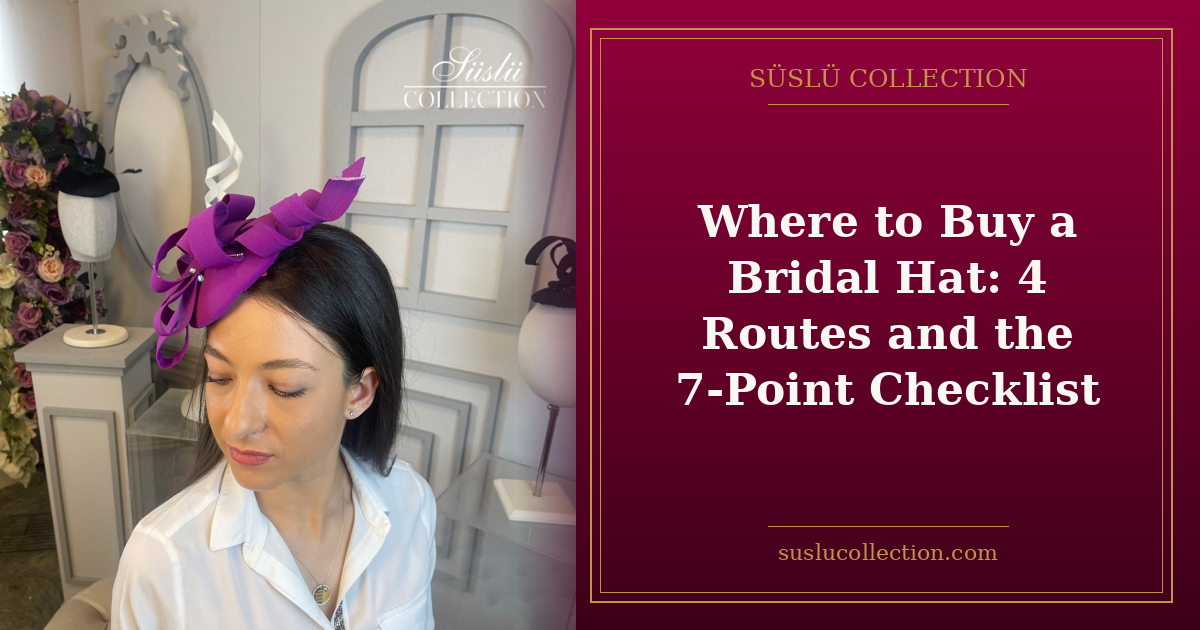
The style is chosen; now the practical question — where do you actually buy a bridal hat? Four routes exist, and they are not equal. 🛍️
The high street sells hats two months a year; marketplaces sell photographs. Real millinery lives where netting has a name and a maker.
This guide weighs the four routes honestly, arms you with the seven-point online checklist, and lays the timeline that delivers the right piece a week early, not a day late. ✨
Main guide: the wedding hat guide · sew-your-own route: where to buy veiling.
The four routes, honestly weighed
Every bride tries at least two of these routes; the table above saves you the disappointing ones. Here is each route’s true character. 🗺️
The pattern to notice: the routes differ less in price than in certainty — of quality, of tone, of arrival.
What does the high street offer?
Speed and touch: you leave with a box today. The costs are range and season — occasion hats appear briefly around holidays, in generic tones, with costume-grade netting the norm.
What is the marketplace lottery?
Endless choice, unverifiable quality: the photo is a render, the seller a warehouse, the netting a surprise. Reviews mention “smaller than expected” more than any other phrase — read them before trusting the picture.
Why do bridal salons fall short on hats?
Their trade is gowns and long veils; headpieces are an afterthought rack. Beautiful shops, wrong aisle for this purchase.
What does the specialist atelier change?
Everything the others lack: named netting, real photos, stated mountings, custom tones and a human before the basket. The route this whole guide assumes — and the one the collection runs on.
Route chosen. Now the armour for buying online: the seven-point checklist. 🛡️
The seven-point checklist, decoded
Online buying is safe exactly to the degree the product page is honest. The seven points above are the honesty test; here is what each one screens out. ✅
Run the list before payment, not after delivery: two minutes of reading replaces two weeks of exchange stress.
Why insist on real photographs?
Renders hide the one thing that matters: texture. Real photos show how netting stands, how the base curves, how light behaves — the same reasons our cards carry real model shots.
What do the named details prove?
Netting name, mounting type, base centimetres: sellers who know their craft state it; sellers reselling a container do not. Absence of detail is itself the answer.
Why must the exchange policy be written?
Tone is the honest risk of online millinery: screens brighten every shade. A written exchange window turns that risk into a formality — and its absence turns a purchase into a gamble.
What does “a human answers” screen for?
Everything else: ask one real question — “will this tone suit an ivory dress?” — and the reply’s speed and substance tell you who you are buying from. Test us anytime via contact.
Checklist armed. Two special cases remain: custom work and the calendar. 🗓️
When buying means ordering: the custom route
Sometimes no shelf holds your answer: a rare dress tone, a family lace to mount, a shape between sizes. Then buying becomes commissioning — a different craft with its own rhythm. 🧵
The route rewards early birds: custom work trades speed for exactness, and exactness needs days.
What can be commissioned?
Tone-matched dyeing, netting length and density, mounting for your exact hairstyle, heirloom trims sewn in. The full journey — stages, approvals, timelines — lives in the custom process guide.
How does pricing differ from ready-made?
By hours, not mystery: dye baths and hand-mounting are studio time, itemised in the quote. Ready pieces from the same bench carry the same craft in stock tones.
How do you brief a maker well?
Three photos beat three paragraphs: the dress in daylight, your planned hairstyle, one inspiration piece. That trio lets any good atelier quote accurately in one reply.
Ready-made or custom — the one-line test?
Standard tone and two weeks or more: ready-made serves you. Rare tone or heirloom dreams: commission. Undecided cases get settled fastest by asking — with the dress photo attached.
Both roads mapped. Last: the timeline that makes either road stress-free. ⏳
The safe timeline: from search to doorstep
Most hat disasters are calendar disasters wearing a disguise. The timeline above ends the genre; here is the reasoning behind each milestone. 📅
The core rule fits one line: the piece is in your hands one week before the day — everything else follows backwards from there.
Why shortlist at three weeks?
Questions need answers and answers need days: mounting queries, tone photos, dispatch confirmations. Three weeks buys unhurried certainty; custom orders stretch the runway further, as the custom guide details.
What happens at the daylight check?
Box opened by a window, piece held against the dress: tone verdicts are delivered by the sun, never the ceiling bulb. Photograph the pairing — the album-eye settles borderline calls.
What if the tone argues?
The three-day buffer is exactly for this: exchange or adjustment while the window is open. A timeline followed means even the worst case costs a courier trip, not the wedding morning.
Where does the timeline start today?
At the shortlist: the veil collection and the wider hat range are built for step one — three candidates, seven checks, one order. Season pressure changes the math slightly; the seasonal guide flags the busy months.
Route, checklist, timeline: the purchase is now a plan. Summary below. 🎀
🧵 Notes from the Atelier
The message we receive most in high season: “the marketplace hat arrived — it’s nothing like the photo.” We answer kindly, and often rescue the week with a ready piece; but the calendar rescue only works when the buyer started early. Second note: customers who ask one pre-sale question almost never need an exchange — the conversation catches tone issues before the courier does. Third: the daylight-check habit, once learned for the wedding, follows customers into every future purchase — the sun stays the best shop assistant.
📖 Quick Glossary
Render: a computer image posing as a product photo. Costume-grade: netting made for one evening, not an heirloom. Dispatch confirmation: the written shipping date promise. Daylight check: tone verification by a window against the dress. Commissioning: ordering a piece made to your specification.
⚡ Quick Summary
Four routes, unequal certainty: high street is fast but generic, marketplaces are a lottery, bridal salons stock the wrong aisle, and the specialist atelier delivers named craft with a human attached. 🛍️ Buy online behind the seven-point checklist — real photos, named details, written exchange, answered questions. Commission when the tone is rare; buy ready when it is standard. Either road, the piece sits in your hands a week early.
🎯 Next Step
Start step one now: shortlist three from the collection, then send your questions and dress photo via contact — checklist point seven, answered the same day.
Sıkça Sorulan Sorular
Where is the best place to buy a bridal hat?
A specialist millinery atelier — in person or online: named netting, real photographs, stated mountings and pre-sale advice. High-street and marketplace routes trade certainty for speed.
Is it safe to buy a wedding hat online?
Yes, behind the checklist: real photos, named netting and mounting, base measurements, a written exchange policy and a seller who answers questions before the sale.
How far in advance should I buy my wedding hat?
Order two weeks out so the piece is in hand one week early: time for the daylight check against the dress and an exchange if the tone argues. Custom work needs two to three weeks more.
Kaynak: Wikipedia — Millinery
Bridal Hats & Veils
Browse Products


