

Brand Story: From the Counter to E-commerce
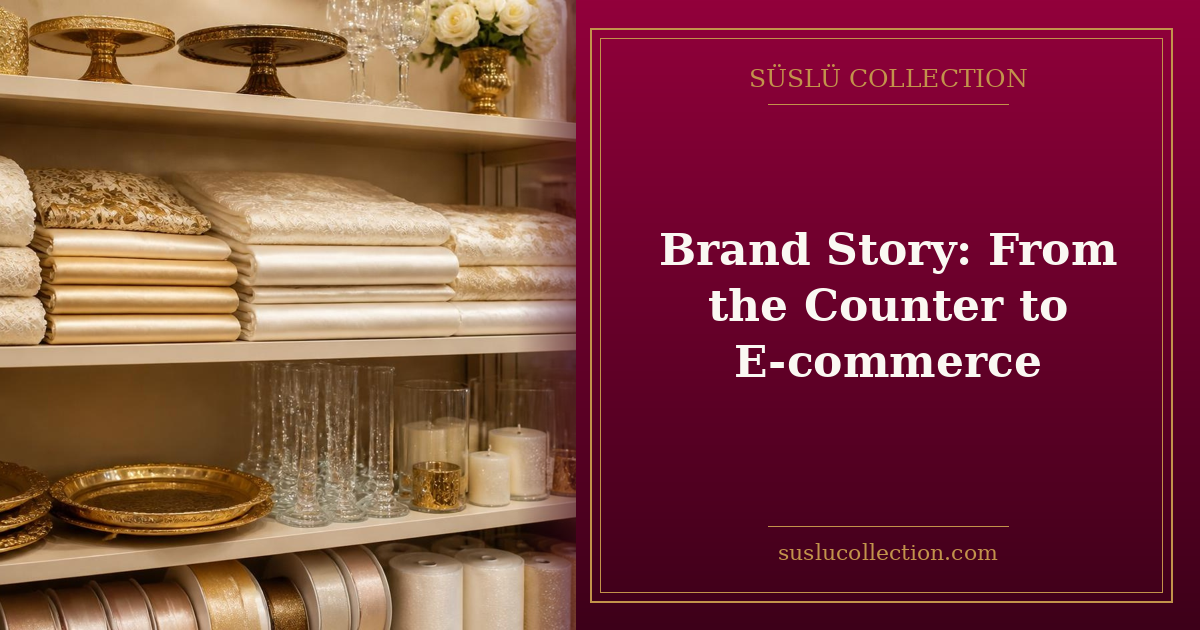
What is the story of Süslü Collection? Short answer: it began at a shop counter, continued in the atelier and moved online — a family company run through the Malhatun family’s partnership, it carried the traditional retail experience of its Bakırköy and Fatih stores into e-commerce. 🏛️
This piece covers the brand’s road, the difference between store and e-commerce experience, and what changed and what didn’t along the way.
In short: the channel changed, the atelier stayed — pattern, cutting and handwork still happen at the same table. ✨
Main guide: Süslü Collection brand · the brand’s own words: about us.
From counter to screen: five stops
The strip drew the stops; this section says what each added. The story in one sentence: what was learned face to face was carried to the screen. 🧭
The stops don’t cancel each other out; today all of them run at once.
What did the store teach?
The customer: which worry sits behind which question, what a mother is really asking when she says “will it itch?” That knowledge now shapes how product pages are written.
What did the atelier add?
In-house making: Süslü Malhatun’s handmade pieces turned production, not only selling, into the brand’s work. Process in the production piece.
How did the collection idea come about?
Product families by day instead of single items: christening, bridal, keepsake boxes, décor. Detail in the collections piece.
What did e-commerce change?
Distance: orders came from outside Istanbul and from abroad. That required measurements, fabric details and care advice to be written down.
Where does it stand today?
Two channels together: the Bakırköy and Fatih stores and online sales. The store side is in the stores piece.
What does being a family business add?
Short decision paths: when the people who design, make and deliver are the same team, responsibility sits in one place.
Where does the name come from?
“Süslü” comes from Süslü Malhatun, the name behind the family’s handmade pieces; “collection” describes the whole they form.
The road is drawn. Now the comparison. ⚖️
Store experience, e-commerce experience
The table set the two experiences side by side; this section says what each taught the other. They are two languages of the same work. 🗣️
In a store you read a face, on a screen a sentence: what’s being said is the same.
How does communication work in store?
Instantly: a question is asked, a fabric is shown, a decision comes in ten minutes. Touch speeds the decision.
And on a screen?
In writing: the product page and the messages. So the size chart, fabric content and care advice must be complete.
What discipline did e-commerce bring?
Precision: “cream” isn’t enough, a daylight photo is needed; “medium” isn’t enough, centimetres are.
What warmth does the store keep?
Advice: which dress goes with which keepsake box, how a child’s shoulder actually sits — seen on the spot.
How do the two feed each other?
The questions asked most in store go onto product pages; the requests arriving online shape store stock.
What did orders from abroad change?
The calendar and the writing: shipping and customs time joined the planning, and measurement and fabric details became more detailed. For a family buying from afar, the product page is the only reference.
The difference is explained. Next, the changes. 🔁
What changed and what didn’t
The list split two columns; this section opens each line. That is what matters in a brand’s story: what you let change and what you protect. 🧷
What changed are tools; what didn’t is the work.
How did the sales channel change?
From one channel to two: store and online. The customer now uses whichever they prefer.
And the way of communicating?
From face to face to writing: brief, quote and approval now run in writing. The flow is in the order piece.
Product pages?
From photos to information: fabric content, lining, measurements in centimetres and care advice became standard.
What didn’t change in the atelier?
Pattern, cutting, sewing and handwork: done today in the same order and with the same care.
Why is the focus still special days?
Because that’s where the need is: christenings, weddings, birthdays, engagements. A piece made for those days is worn once and kept for years. Why handwork, in that piece.
What did customer feedback change?
A great deal: the most frequent questions went onto product pages, the most requested colours entered stock planning, and repeated alteration requests fed back into the patterns.
The split is done. Last section: what comes next. 🌱
What comes next
A family company’s plan doesn’t have to be grand: to explain more clearly and personalise more. This section gives the direction ahead. 🔭
These aren’t claims but the headings being worked on.
What does clearer explanation mean?
Putting each piece’s fabric, lining, measurements and care into writing: for a family buying from a distance, that is the only thing that reduces hesitation.
Where is personalisation heading?
Wider use of name and date embroidery, sibling and family sets, and different cuts for different ages from one fabric.
And the keepsake side?
Storage information alongside the piece: how a dress should be kept and which box it belongs in. Guide in the next generation piece.
What about the stores?
They stay: Bakırköy and Fatih remain open for customers who want to touch the fabric. Visit guide in the stores piece.
How often do new collections arrive?
By the season and the ceremony calendar: spring-summer to the wedding and christening rush, autumn-winter to mevlid and Eid. Requested models enter production in between too.
Where to begin?
Write your need and ceremony date via contact — a proposal the same day; products in collections, and the brand’s own words on the about us page.
The story file closes: road, experience, change, what’s next. Summary below. 🎀
🧵 Notes from the Atelier
The question we heard most across years in store was “what happens when I wash it?” — today the answer sits on every product page; that is what e-commerce taught us. Second note: sending a fabric sample to families ordering from a distance is the best substitute for the shop counter. Third note: customers who come back years later with a piece they bought remind us why this work continues.
📖 Quick Glossary
Family business: a company run through a family partnership. Atelier: where a piece is made from pattern to trim. Collection: a product family serving one special day. Product page: where fabric, lining, measurements and care are written.
⚡ Quick Summary
The brand began at a shop counter: the face-to-face experience of the Bakırköy and Fatih stores moved first into atelier production, then into collections and e-commerce. 🏛️ The store brought touch, e-commerce brought precision. What changed is the sales channel and the way of communicating; what didn’t is pattern, cutting and handwork in the atelier, and the focus on special days.
🎯 Next Step
Write your need and ceremony date via contact — a proposal the same day; products in collections.
Sıkça Sorulan Sorular
Whose brand is Süslü Collection?
It is a family company run through the Malhatun family’s partnership; alongside trading in jewellery and accessories it sells Süslü Malhatun’s handmade products. The traditional retail experience of its Bakırköy and Fatih stores was carried into e-commerce.
How long has the brand been operating?
Traditional retail has run for many years in the Bakırköy and Fatih stores; that experience later moved into atelier production and e-commerce. Current details are on the about us page.
Where are the products made?
Most pieces are made in the brand’s own atelier: pattern, cutting, sewing and lace and embroidery work are done by hand. For custom orders the pattern is drawn for that person.
Kaynak: Wikipedia — Family business
About Süslü Collection
Browse Products


