

Keeping the Keepsake Box for the Next Generation: A 20-Year Guide
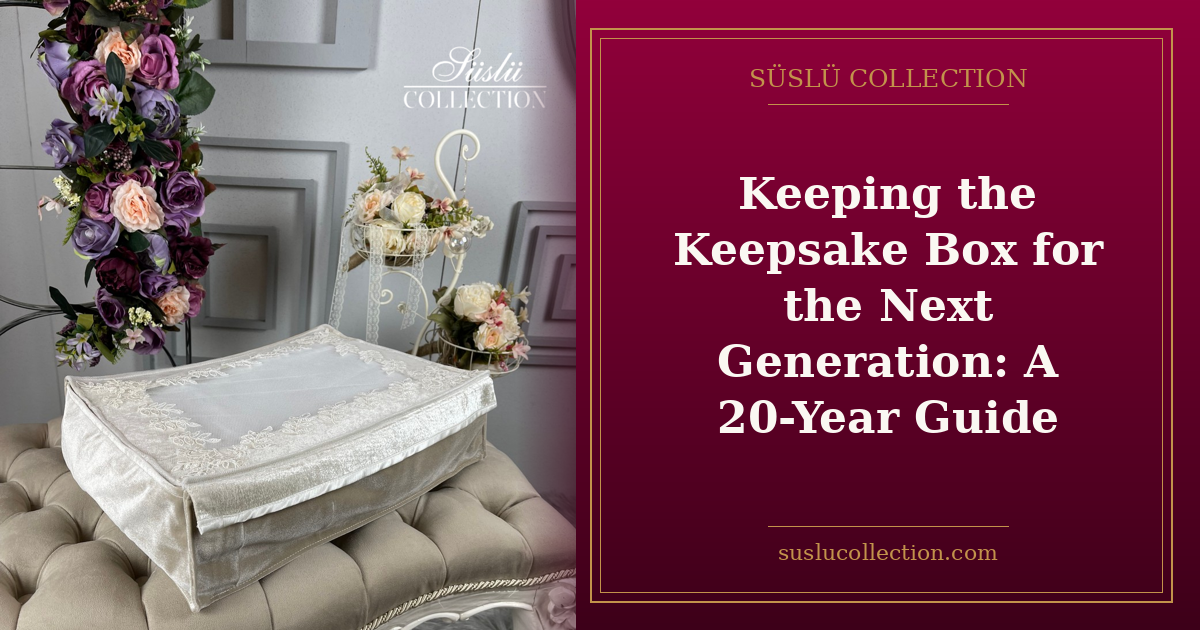
How do you keep a christening keepsake box for the next generation? Short answer: in a dark, dry, breathable place, aired once a year — a well-kept box brings out the first-day outfit twenty years later and is opened again at the next christening. ⏳
This piece covers the three rules of long storage, the difference between a well-kept and a neglected box, the box’s journey into the future and the handover moment.
A box’s real value appears not today, but years from now: a box is opened and a family looks at its own beginning. ✨
Main guide: christening keepsake box guide · outfit storage: how to store a christening gown.
Three rules of long storage
The list set out the rules; this section opens the reason for each. Fabric has three enemies: light, damp and acid. Three rules keep all three out. 🛡️
Setting the rules once is enough; after that, ten minutes of care a year.
Why dark?
Light, especially sunlight, yellows and weakens the fibres in lace and satin over time. The box should live in a closed cupboard, away from windows.
Why dry?
Damp turns into mildew stains, a musty smell and rust on metal parts. Cupboards against a bathroom wall and basements aren’t suitable.
Why breathable?
Plastic bags and sealed plastic boxes trap moisture inside. Acid-free paper, cotton pouches and a fabric-covered box breathe; the fabric stays healthy for years.
Why does temperature matter?
Hot-cold swings tire fabric and cause condensation: attics heat up in summer and cool in winter. A cupboard in an inner room of the house is the most stable place.
How should the box sit?
Flat, with nothing heavy on top: so the lid doesn’t collapse and the outfit inside isn’t crushed. In a box stored upright, the outfit slides to one side.
How is the box protected when moving house?
It doesn’t go into a moving carton; it’s carried by hand or on a passenger seat: the first job in the new home is finding a suitable cupboard and laying it flat. A box lost in a move is usually one that ended up in a carton.
The rules are set. Now the difference. ⚖️
A well-kept box and a neglected one
The table set the two outcomes side by side; this section opens where the difference comes from. It comes from small habits: a bag, a paper clip, a forgotten stain. 🔍
Same box, same outfit; twenty years later, two different boxes.
Why does yellowing happen?
Invisible sugar and milk stains, acidic cardboard and light: if the outfit isn’t cleaned before going into the box, stains surface over the years.
How do permanent creases form?
If the outfit stays folded along the same lines for years, the fibres break along those lines. Changing the fold lines during yearly care and putting rolled paper in the folds prevents this.
Where does rust come from?
Safety pins, paper clips, staples and metal buckles: they rust with damp and leave brown marks on fabric. There should be no metal in the box.
How is the box itself protected?
Velvet is brushed with a soft brush, satin wiped gently with a clean damp cloth; quilted fabric is dusted with a low-suction vacuum. The box is never immersed in water.
What about moths?
The risk is low with clean, dry fabric: instead of mothballs, lavender or cedar sachets that don’t touch the fabric can be used.
What if the lid collapses?
It happens when things are stacked on it or from damp: ateliers can often re-support and re-cover the lid. If the inside has been protected, the box is easily repaired.
The difference is seen. Next, the journey. 🛤️
The box’s journey into the future
The strip drew the stops; this section explains what to do at each. A box isn’t a box that’s closed and forgotten but an archive that lives over the years. 🌱
Each stop adds a new layer of meaning to the box.
What’s done in the first year?
The outfit settles and the keepsake envelope is completed: once the ceremony photos are printed, the best one goes in. The order is in the what to put inside piece.
What’s done every year?
A short opening on a dry day: the outfit is aired, fold lines changed, stains checked. Ten minutes is enough.
What’s added in the early years?
First-birthday booties, a first-tooth box, a first drawing, a first school card: the box becomes a small archive of the child’s early years. A lid that closes comfortably sets the limit.
What happens at eighteen?
Many families hand the box to the child: a letter is added and the box is opened together. The child holds their own story in their hands for the first time.
What happens in the next generation?
At their own child’s christening the old box is opened again: the old outfit is sometimes worn again, sometimes displayed beside the new box.
The journey is drawn. Last section: the handover. 🎁
The handover and reuse
A box’s most emotional moment is the day it’s handed over. This section covers preparing the handover and reusing the old outfit. 💌
A well-prepared handover becomes one of a family’s most unforgettable gatherings.
Is a letter written for the handover?
Highly recommended: a short letter from the parents or godparents describes the ceremony day and the feelings of that day. The letter goes into the keepsake envelope.
Where does the handover take place?
At the family table, at a birthday celebration or on a quiet evening: the box is opened together, and each piece comes out with a story.
Is the old outfit worn again?
If well kept, yes: with cleaning and small repairs it can be put on a new baby. For reuse, see the reusing a christening gown piece.
A new box or the old one?
Most families use both: the old box carries the family’s past, the new box the new baby’s story. Side by side on the ceremony table they are very meaningful.
Where can you find a box?
Lined models suited to long storage are in the keepsake box collection; for embroidery and a handover note, write via contact.
The future file closes: rules, difference, journey, handover. Summary below. 🎀
🧵 Notes from the Atelier
Some families who bought a box from us years ago send photos when they open it on their child’s eighteenth birthday — seeing the outfit in its first-day tone is a special joy for us too. Second note: families who write a handover letter say that letter becomes the most precious part of the box. Third note: almost every problem in a neglected box begins with a plastic bag.
📖 Quick Glossary
Yearly care: opening and airing the box once a year. Changing folds: altering fold lines to prevent permanent creases. Handover letter: a family letter given to the child with the box. Cedar sachet: a natural scent sachet used against moths.
⚡ Quick Summary
Three rules of long storage: dark, dry, breathable; plus steady temperature and lying flat. ⏳ Yellowing, permanent creases and rust come from small neglects. A short yearly check is enough. The box’s path: first year, every year, early years, handover at eighteen and reopening in the next generation. At the handover, a family letter becomes the most precious piece.
🎯 Next Step
For a box suited to long storage, write via contact; models in the keepsake box collection.
Sıkça Sorulan Sorular
How is a christening keepsake box stored for many years?
In a cupboard away from sunlight, with low humidity and a steady temperature, lying flat with nothing heavy on top. The contents are protected with acid-free paper and cotton pouches; plastic bags, metal parts and mothballs aren’t used. The box is aired briefly once a year.
What if the outfit in the box has yellowed?
Don’t treat it at home with bleach; lace and satin can be damaged. Consulting a professional cleaner experienced with heirloom textiles is the safest way.
When is the box handed to the child?
It varies by family; the most common time is the eighteenth birthday. At the handover, opening the box together and adding a short letter from the parents or godparents is recommended.
Kaynak: Wikipedia — Baptism
Christening Keepsake Box
Browse Products


