

Silk Shantung, Velvet, Tulle: A Guide to Girls’ Dress Fabrics
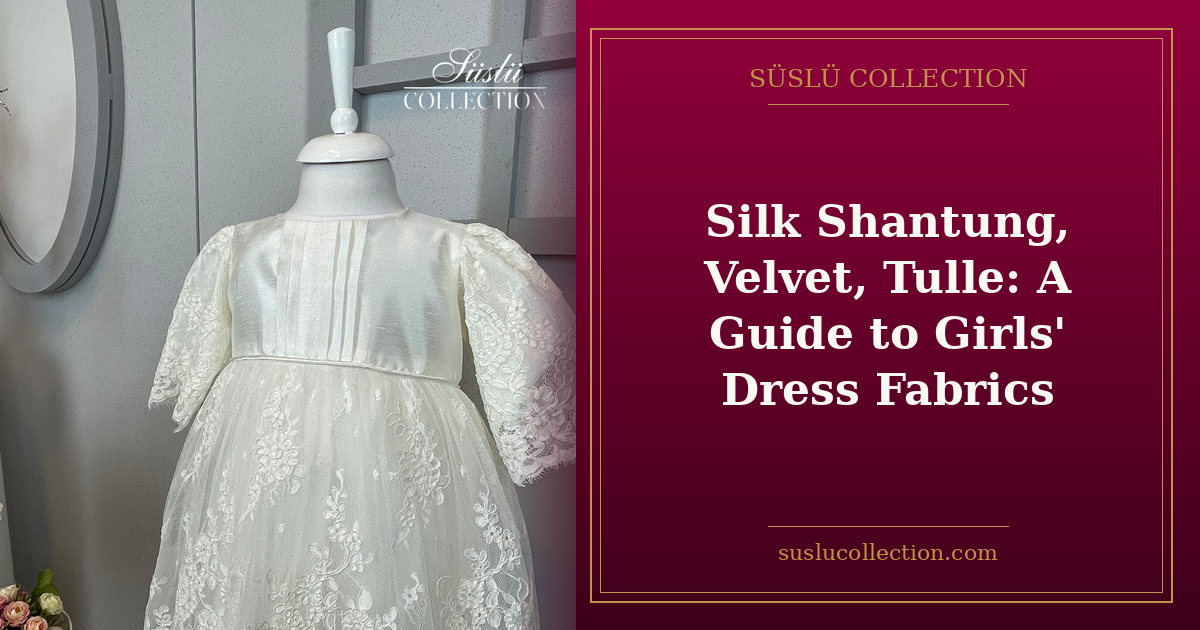
Which fabric should you choose for a girl’s dress? Short answer: season, drape and touch — silk shantung gives structure, velvet warmth, tulle volume, satin shine; and the layer touching the skin is always cotton. 🧵
This piece covers the five characters of occasion fabrics, the summer-winter fabric difference and the three questions behind a fabric choice.
Fabric is the invisible half of a dress: in the photo the outer fabric talks, over the hours the lining does. ✨
Main guide: girls’ occasion dresses · on lace: French lace girls’ dress.
Five fabrics, five characters
The list introduced the fabrics; this section explains whom and which occasion each suits. Choosing fabric is really a continuation of choosing the occasion: the occasion’s language calls for the fabric. 🎭
No fabric is “the best”; each is the best answer to a different question.
Why is silk shantung so loved?
For its distinctive texture and soft glow: slubbed threads give the fabric a lively surface, and it holds its own form. Mevlid, Eid, engagement — any occasion wanting a simple yet noble presence.
When does velvet lead?
In winter: its pile reflects light softly and it keeps warm. Burgundy, navy and emerald velvet are winter-occasion classics; with plaid, the two pillars of the winter wardrobe.
What does tulle carry?
Volume: layer upon layer of tulle is the source of a full skirt. Soft tulle is comfortable, stiff (crystal) tulle stands up more but can prickle — soft tulle is preferred for children.
Who suits satin?
Evening occasions: its smooth, shiny surface flows in the light. It creases easily and shows stains; it’s more practical in sashes and bows.
Why is cotton everywhere?
Because it breathes and washes: the body of summer dresses and the lining of every dress. An occasion dress without cotton lining tires a child at a long event.
What do linen blends do?
They bring a natural smartness to summer garden occasions: cool and matte. Pure linen creases quickly, so a blend with cotton or viscose is more practical for children.
The characters are known. Now the season. ☀️❄️
Summer fabric, winter fabric
The table separated the two seasons; this section explains why. A child’s body temperature changes faster than an adult’s: the same dress overwhelms in August and chills in December. 🌡️
Seasonal fabric is half of comfort; the other half is the lining.
What is worn in summer?
Breathable fabric: cotton, linen blend, fine shantung. If tulle is used, a single layer with cotton lining underneath. Light tones reflect the sun and keep the child cool.
What is worn in winter?
Velvet, heavy shantung, wool plaid: a lined body with a bolero on top. The coat comes off at the door; in a heated hall the dress must be enough on its own.
Why does static happen?
In dry winter air, synthetic fabrics build up static: the skirt clings to the legs and hair flies up. A cotton lining and cotton-rich tights cut it.
In between seasons?
Medium-weight shantung + a removable cardigan: on a day that’s cool in the morning and mild at noon, layers are the safest answer.
An air-conditioned summer hall?
Hot outside, cold inside: a light cotton dress + a thin cardigan in the bag. A sweaty child walking into a cold hall gets chilled right away.
Gardens and the seaside?
Humidity and wind: linen blends and cotton stay comfortable in humidity; thin tulle floats in wind but can soak and grow heavy quickly. A shorter length and single layer are preferred.
The season is read. Next, the three questions. ❓
Three questions, one fabric decision
The strip set out the questions; this section shows how the answers combine. Asked together, the three questions narrow the fabric list to one option. 🎯
Let’s look at examples: three occasions, three fabrics.
A winter mevlid?
Cold season + quiet presence + cotton lining: navy or burgundy heavy shantung with long sleeves. Velvet works too, but shantung is closer to the mevlid’s quiet language.
A summer garden birthday?
Warm season + volume + cotton lining: a single layer of soft tulle skirt with a cotton body. Above-knee length for movement.
A winter evening wedding?
Cold season + a glowing presence + lining: a velvet body with a satin sash, or a lightly sequinned tulle skirt. Finished with a bolero.
What do they all share?
The lining: whatever the outer fabric, the layer touching skin is cotton. If the product page doesn’t mention the lining, always ask.
What do you read on a fabric label?
The content percentages: “100% polyester” is fine for the outer fabric, but if the lining is polyester too it will make a child sweat at a long event. Ideal: outer fabric free, lining cotton.
The decision is made. Last section: care. 🧺
Care by fabric
Each fabric has its own care language: the wrong wash can finish a season’s dress in a single day. This section gives five fabrics’ care rules one by one. 🧺
The rule isn’t complicated: low heat, gentle handling, flat drying.
How is silk shantung washed?
Dry cleaning is safest; if hand-washed, cold water and silk detergent, no wringing. It can leave water marks — for spot stains, professional care is preferred.
Velvet?
Dry cleaning or steam refreshing: velvet isn’t ironed, its pile gets crushed. Holding it in steam on a hanger releases creases.
Tulle?
By hand, in cold water, in a mesh bag: not wrung, dried flat. Steam instead of an iron; tulle melts at high heat.
Satin?
Iron inside out on low heat with a cloth between, so it leaves no shine marks. Stains must be cleaned quickly — satin holds stains fast.
Cotton?
The easiest: machine at 30 degrees, turned inside out. Coloured cotton is washed separately the first time.
Where to look?
Models with listed fabric details are in the girls’ dresses collection; write the occasion and season via contact for a same-day fabric recommendation.
The fabric file closes: character, season, questions, care. Summary below. 🎀
🧵 Notes from the Atelier
The most common fabric complaint is “it itched” — and the cause is almost always the lining. With our cotton-lined models this complaint is close to zero. Second note: silk shantung is the fabric that most easily lets the same dress be re-worn at a mevlid, Eid and engagement. Third note: questions about ironing velvet dresses grow every winter; the answer is always the same — steam, not an iron.
📖 Quick Glossary
Shantung: a textured silk or silk-look fabric with slubbed threads. Crystal tulle: stiff tulle that stands upright. Lining: the inner layer touching the skin. Static: synthetic fabric charging in dry air.
⚡ Quick Summary
Five fabrics, five characters: shantung for structure, velvet for warmth, tulle for volume, satin for shine, cotton for breath. 🧵 In summer cotton-linen-fine shantung, in winter velvet-heavy shantung-plaid. Three questions choose the fabric: season, drape, what touches skin — the lining is always cotton. Shantung and velvet to the dry cleaner, tulle by hand, satin ironed inside out, cotton in the machine.
🎯 Next Step
Write the occasion and season via contact — a fabric recommendation the same day; models in the girls’ dresses collection.
Sıkça Sorulan Sorular
What is the best fabric for a girl’s occasion dress?
There’s no single best fabric; it depends on the occasion and season. Silk shantung is ideal for elegant structure, velvet for winter occasions, tulle for a full skirt and satin for evening shine. The shared condition is that the layer touching the skin is a cotton lining.
What is silk shantung?
A fabric woven with slubbed threads, giving its surface light texture and a soft glow. It holds its form and gives a noble yet simple presence, which is why it’s a favourite for elegant occasions like a mevlid, Eid or engagement.
How do you clean a velvet girls’ dress?
Velvet isn’t ironed; an iron crushes the pile and leaves marks. Dry cleaning is the safest method, and creases are released by holding the dress in steam on a hanger. Small stains are gently wiped with a damp cloth in the direction of the pile.
Kaynak: Wikipedia — Shantung
Girls' Occasion Dresses
Browse Products


