

French Lace Girls’ Dress: The Story of a Craft
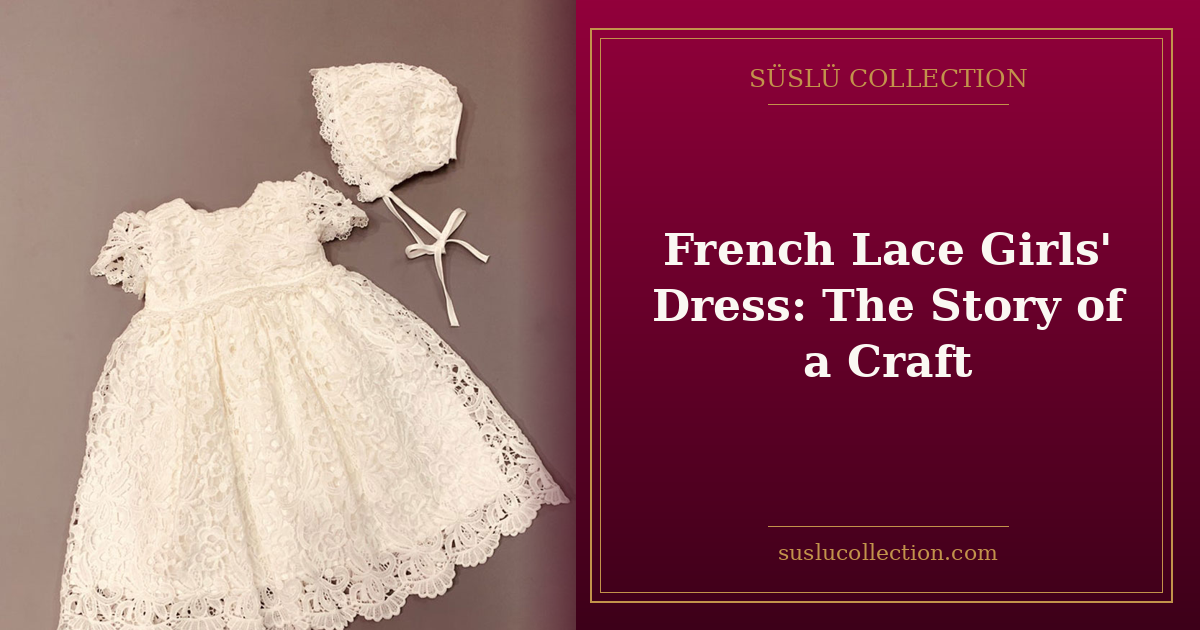
Why is a French lace girls’ dress so loved? Short answer: fine thread, crisp motifs, timeless presence — French lace is the most graceful form of a centuries-old craft in childrenswear; up close you see the workmanship, and years later you still see the elegance. 🤍
This piece covers the journey of lace, what sets French lace apart from ordinary lace, and the five places lace sits on a girl’s dress.
Lace doesn’t shine, it speaks: unlike sequins it gains value up close rather than from afar — which is why it’s the favourite at occasions where elders are present. ✨
Main guide: girls’ occasion dresses · fabric choice: girls’ dress fabrics.
The journey of lace: from needle to loom
The strip drew the stops; this section explains what each left to today’s dress. The story of lace is a story of patience: once, months of needlework went into a single collar. 🪡
Knowing this story changes how you look at a lace dress: you see the labour, not just the price.
What was lace in the needle era?
A fortune: lace worked stitch by stitch adorned noble families and church garments. The lace on a child’s christening gown counted among a family’s most precious possessions.
What did the French looms change?
Looms in northern France gave lace fineness and evenness: fine lace made on Leavers-type machines brought a near-handmade grace within reach. The name “French lace” became synonymous with that quality.
Why was it kept in family chests?
Because it didn’t wear out: good lace, stored properly, keeps its form for decades. Lace collars from old trousseau chests are being sewn onto new dresses today.
How did it enter childrenswear?
Through ceremonial dresses: christenings, first celebrations, family weddings. A lace collar and hem became the “special day” signature of children’s clothing.
What’s different today?
Comfort: lace now pairs with cotton lining and doesn’t touch the skin. Instead of the stiff, itchy lace of the past, there’s lace that drapes softly and that a child wears happily.
Its tie to Turkish home tradition?
Needle lace (oya) and lace are part of Anatolian homes too: trousseaux, headscarf edges, pillowcases. So a lace dress carries a familiar, respected delicacy in the eyes of grandparents.
The journey is told. Now the difference. 🔍
How do you recognise French lace?
The table set the two laces side by side; this section explains how to see the difference by hand and eye. Quality hides in three senses: eye, fingertip and time. 👁️
In a photo two laces can look similar; up close the difference becomes clear.
What does the eye look for?
Crispness of motif: flowers and branches worked in fine thread look sharp and even. Thick-thread lace shows blurred motifs, crowded in places.
What does the fingertip feel?
Softness: good lace drapes like fabric and curls in the palm. Lace that feels stiff and plasticky both itches and wears quickly.
Why does the edge matter?
French lace usually has a scalloped, finished edge: a raw-cut edge frays after a few wears. At the hem and collar this difference shows at once.
What does time reveal?
Form: quality lace looks the same after washing, doesn’t sag or loosen. Lace that loses its shape in a few washes is the coarse kind of machine production.
What should the product page state?
The type and content of the lace (cotton, viscose, blend) and the lining. “Lace detail” isn’t enough; asking for a close-up photo is always your right.
Where does the price difference come from?
From thread fineness, loom time and edge work: a metre of good lace costs several times ordinary lace — and the difference becomes clear when the dress comes out of its box years later.
The difference is seen. Next, placement. 📍
Five places for lace on a girl’s dress
The list counted the places; this section says which occasion and age each suits. The rule is one sparkle focus: if lace leads, sequins and big bows rest. 🤍
Where lace sits sets the dress’s character: elegance at the collar, movement at the hem, ceremony all over.
Who suits a lace collar?
Every age and quiet occasions: mevlid, Eid, family visits. It frames the face and brings the child’s face forward in photos. Mevlid rules are in the mevlid dress piece.
Lace at the cuff?
A mobile zone: the lace should be light and soft, lined inside. On short-sleeved dresses, cuff lace is an elegant detail for summer occasions.
Why is hem lace loved?
It shows as she walks: with each step the child carries the delicacy at the edge of her skirt. For little ones who play on the floor, hem lace can get dirty — a dark ground or shorter length is preferred.
Bodice appliqué?
Lace motifs cut out and sewn onto tulle or shantung: the rich yet quiet trim of ceremonial dresses. The edges of an appliqué being finished on the inside matters for comfort.
An all-over lace dress?
The star of special days: the whole body in lace, with cotton lining underneath. It’s enough on its own; the hairband and shoes stay simple.
Is coloured lace possible?
Yes: blush, navy and burgundy lace are very elegant at non-white occasions. For a wedding guest, coloured lace is a fine alternative to white.
Placement done. Last section: care. 🧺
Caring for and storing a lace dress
Lace’s timelessness is kept by the right care. This section explains washing, ironing and storage in three short rules. 🧺
The rules are simple; skip them and even the finest lace tires in one season.
How is it washed?
By hand, in cold or lukewarm water, with a gentle detergent; no rubbing, no wringing. If the machine is needed, in a mesh laundry bag on a delicate cycle. Dry flat on a towel, out of the sun.
How is it ironed?
Inside out, on low heat, with a thin cloth between: if lace touches the iron directly, threads shine or melt.
How is it stored?
Folded with acid-free paper, in a dark, dry cupboard: plastic bags hold moisture and yellow white lace. Storage basics are in our storage piece.
If it gets stained?
Immediately, with cold water and no rubbing: sugar and fruit stains yellow over time. For unknown stains and embroidered areas, professional cleaning.
Where to look?
Lace models are in the girls’ dresses collection; our French lace-edged dress is a live example of this piece. Send questions via contact.
The lace file closes: journey, difference, placement, care. Summary below. 🎀
🧵 Notes from the Atelier
The loveliest moment with lace orders is when a grandmother takes the dress in her hands and says “this lace is like the old ones” — good lace instantly joins generations. Second note: lace-collared dresses are worn with the same peace of mind at a mevlid, Eid and family visits; they’re our most re-worn models. Third note: yellowing of lace stored in plastic bags is the care question we receive most — acid-free paper prevents it completely.
📖 Quick Glossary
Leavers: the loom type on which fine French lace is made. Scallop: the wavy, finished edge of lace. Appliqué: a lace motif cut out and sewn onto fabric. Acid-free paper: storage paper that prevents yellowing.
⚡ Quick Summary
Lace is a craft that runs from the hand needle to French looms; French lace is known for fine thread, crisp motifs, soft drape and finished edges. 🤍 On a girl’s dress it has five places: collar, cuff, hem, bodice appliqué, all-over — all with cotton lining. Hand-wash in cold water, iron inside out, store with acid-free paper.
🎯 Next Step
Write the occasion and measurements via contact — a recommendation the same day; lace models in the girls’ dresses collection.
Sıkça Sorulan Sorular
What is the difference between French lace and ordinary lace?
French lace is worked in fine thread with crisp, even motifs, drapes softly like fabric and has scalloped, finished edges. Ordinary machine lace uses thicker thread, has blurred motifs and feels stiff; its edges can fray and it may lose its form after a few washes.
Does a lace girls’ dress itch?
Lace can itch if it touches the skin directly. In cotton-lined models the lace is only the outer layer and the child wears it comfortably for hours. In mobile areas like the collar and cuffs, the lace being soft matters too.
How do you wash a lace dress?
By hand in cold or lukewarm water with a gentle detergent, without rubbing or wringing; in a mesh bag on a delicate cycle if a machine is needed. Dry flat out of the sun, iron inside out on low heat and store with acid-free paper.
Kaynak: Wikipedia — Lace
Girls' Occasion Dresses
Browse Products


