

Christening in Istanbul: Five Districts, Five Steps
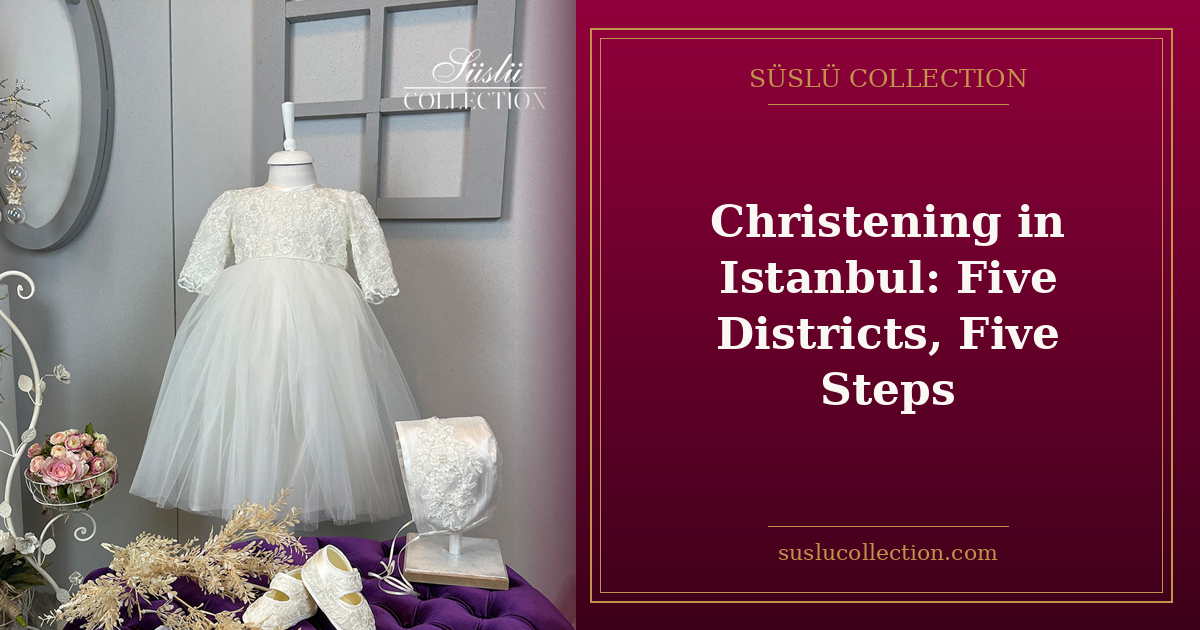
Where is a christening held in Istanbul? Short answer: at the church of the family’s own community — and Istanbul is one of the rare cities holding deep-rooted addresses for every tradition. ⛪
This guide maps the city’s christening geography in five districts, orders the five steps of arranging the venue, and weighs the church-versus-hall choice.
A note up front: exact calendars and terms always come from the church itself — this guide is the compass, the parish office is the address. ✨
Master guide: the christening outfit guide · the day’s plan: the dressing guide.
Five districts: the city’s christening map
The list marked five districts; this section describes each one’s character. Istanbul’s richness shows here: centuries-old churches of different traditions still hold ceremonies. 🗺️
The map works practically: once you know your community, the district for your first phone call names itself.
Who is on the Beyoğlu line?
The historic Catholic and Protestant churches: the İstiklal surroundings have been the Levantine tradition’s centre for centuries. Finding a celebration venue after the rite is also easiest here.
Why is Fener-Balat special?
It is the Greek Orthodox heart: the Ecumenical Patriarchate stands in this district, and its churches are the most rooted addresses of the Orthodox rite. The Orthodox water order differs — the outfit note is in the traditions article.
What does the Asian side offer?
The Kadıköy-Moda area, a rooted church neighbourhood where several communities live side by side: for families on that shore, the option that erases bridge traffic.
Kumkapı and the coastal line?
Kumkapı is the Armenian Apostolic centre; the Bakırköy-Yeşilköy line carries the coast’s historic community churches. In both, the ceremony calendar runs through the parish office.
Map read. Now the official half: how is the venue arranged? 📋
Arranging the venue in five steps
The strip laid the process; this section enlarges two critical steps: the early conversation and the written confirmation. A baptism calendar is a church calendar — it does not work like a banquet hall. 🗓️
The general band: starting conversations 4-8 weeks before the ceremony gives comfortable preparation; in the busy spring-summer season, take the early end.
What is asked in the first conversation?
Four questions suffice: available dates, required documents, godparent conditions, rite order. Answers differ parish to parish; a question always beats an assumption.
What documents are expected?
Usually identity and birth papers plus community-record documents; godparents may face a denomination condition. Since lists differ church to church, requesting a written list is cleanest.
Why insist on written confirmation?
Because the whole chain hangs on it: invitations, photographer, celebration venue, outfit calendar. Once day-hour-order sit on one page, the preparation countdown is built with confidence.
Why is the water question the fifth step?
It is the outfit plan’s key: undershirt entry or dressed blessing? The answer routes the dressing flow into one of the two scenarios in the dressing guide.
Officialdom done. Next, the venue taste: historic church or hall? ⚖️
Historic church or chapel-hall?
The table weighs the two venue types; both are legitimate and the decision turns on ceremony scale. Large family + album ambition → historic church; small core rite → chapel-hall ease. 🏛️
A middle path exists too: a weekday quiet ceremony in a historic church trims both the crowd and the calendar pressure at once.
How does a historic church change the outfit plan?
Stone chill demands layers: the shawl becomes a mandatory member, and in winter a knitted cardigan joins the bag. The full season tuning is in the season guide.
What differs photographically?
The set: stained glass and stone texture hand the frames ready-made depth; in a hall, plainness pushes the baby forward. Showing the photographer the venue in advance rescues the framing either way.
The transport and parking maths?
Historic centres park poorly: on the Beyoğlu and Fener lines plan public transport or a drop-off. The arrival corner and dressing time add ten minutes to this calculation.
How is the celebration venue linked?
Walking distance is gold: a short rite-to-feast hop keeps the baby’s rhythm intact. The comfortable spare outfit rule applies at the exit — if the bag order stands ready, the transition is seamless.
Venue chosen. Closing: binding venue + outfit into one plan. 🔗
Venue and outfit: one calendar, one plan
With the venue arranged, the preparation’s skeleton stands; the outfit calendar bolts onto it. The order never changes: first the date, then the size, then the order. 🔩
The reverse order — outfit first, date later — is the mother of exchange traffic and size surprises.
The first outfit step once the date is fixed?
Taking the three measurements: date plus measurements shrink the model and size decision to minutes. Technique in the sizing guide; confirmation via contact.
Do church rules affect the outfit?
Rarely, but ask: some parishes note details such as shoulder or head covering for adults; the water order affects the model directly. The fifth step’s answer works as a filter in the collection.
Families travelling from outside Istanbul?
The shipping plan targets one-week-early delivery; the fitting happens at the hotel or family home. On travel day the outfit rides hung and bagged — the threshold rule survives every city change.
This guide in one sentence?
Know your community, speak to the church early, get written confirmation, ask the water question — and build the outfit on those four answers. The rest walks even without a compass.
The Istanbul file closes. Summary and questions below. 🎀
🧵 Notes from the Workshop
The discovery we hear most from customers: “we called the church and everything cleared in five minutes” — phone hesitation is the process’s most needless obstacle. Second note: families back from Fener-Balat ceremonies always mention the stone chill afterwards; those who took our shawl advice before the rite send thanks after it. Third: the early-shipping-plus-hotel-fitting routine we run for out-of-town families has worked without a single delay — distance is a detail when the plan exists.
📖 Quick Glossary
Community: the church body a family belongs to. Parish office: the church’s calendar and paperwork desk. Water order: the rite’s undershirt/dressed practice. Written confirmation: day-hour-order approved on one page. Threshold rule: dressing the main outfit at the venue.
⚡ Quick Summary
Istanbul’s christening geography is five districts: Beyoğlu (Catholic-Protestant), Fener-Balat (Greek Orthodox), Kadıköy-Moda, Kumkapı (Armenian Apostolic), Bakırköy-Yeşilköy. ⛪ Arranging runs in five steps: community, early conversation (4-8 weeks), document list, written confirmation, the water question. Historic churches give album and tradition, chapels give flexibility — and the outfit calendar is built on the confirmed date.
🎯 Next Step
Date confirmed? Send it with the three measurements via contact — we list the models matching your water order the same day; the collection filters for every rite.
Sıkça Sorulan Sorular
Where is a christening held in Istanbul?
At the church of the family’s community: the Beyoğlu line is Catholic-Protestant, Fener-Balat the Greek Orthodox heart, Kumkapı the Armenian Apostolic centre; Kadıköy-Moda and Bakırköy-Yeşilköy are rooted alternatives. Calendars and terms come from the parish office.
When should you contact the church for a christening?
Four to eight weeks before the ceremony: available dates, the document list, godparent conditions and the rite order are asked in the first conversation, and day-hour are confirmed in writing.
Why ask about the water order in advance?
Because it decides the outfit plan: in some churches the baby enters the water in a simple undershirt and is dressed after; in others the dressed baby is blessed with sprinkled water. The answer shapes everything from model choice to the dressing flow.
Kaynak: Wikipedia — Churches in Istanbul
Christening
Browse Products


