

Church Wedding Hat Etiquette: Why, When and Who Wears What
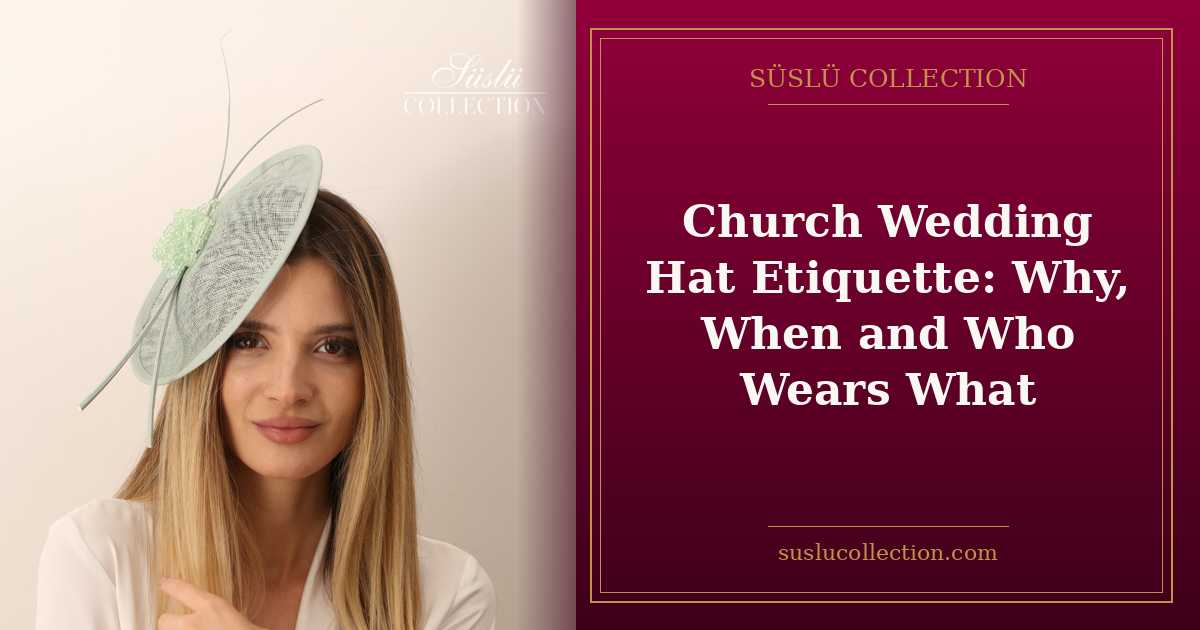
Why does everyone wear a hat at church weddings — and what exactly are the rules? The tradition is older than fashion; the etiquette is simpler than feared. ⛪
Head-covering in church began as a gesture of reverence and grew into a dress language of its own — one every wedding guest can learn in ten minutes.
This guide tells the why, walks the service moment by moment, and casts every role from bride to flower girl — so you enter the aisle certain, not guessing. ✨
Main guide: the wedding hat guide · style names: which is which.
Why hats in church at all?
The habit looks like fashion but was born as theology: covering the head marked humility before the sacred. Centuries later, the gesture remains — softened into elegance. 🕊️
Knowing the root changes how the etiquette feels: these are not style rules, they are respect made visible.
Where does the custom come from?
Early Christian practice asked women to cover their heads at worship; the custom travelled through European court dress into wedding tradition. The chapel hat is that history, miniaturised.
Is covering still required today?
Rarely required, warmly welcomed: most churches treat hats as honoured custom rather than rule. When in doubt, one call to the parish settles it — and the answer is almost always “lovely, please do”.
Does the rule differ by denomination?
In emphasis, yes: traditional Catholic and Orthodox settings hold the custom strongest; many Protestant churches treat it as pure occasion-wear. The venue’s own wedding photos are the best local guide.
What does the hat say that a bare head cannot?
Effort and reverence in one object: a guest in a considered hat tells the couple this day mattered enough to dress for. That message is the entire etiquette in one line.
The why is set. Now the how: the service, moment by moment. 📖
The service walkthrough: five moments, five habits
Church timing has its own choreography, and the hat dances along. The five moments above cover the full service; here is each habit’s reasoning. ⏱️
One principle threads them: the hat behaves so that nobody behind you thinks about it.
Why arrive with the hat on?
The church porch is a threshold, not a mirror station: adjusting crowns in the doorway reads rushed. Final checks happen in the car; the entrance is made complete.
What do brims owe the row behind?
Sightlines: the ceremony’s altar moments belong to everyone. Mid and small brims pass freely; wide brims tilt slightly back when seated, and the row behind stays grateful.
Do hats come off during the ceremony?
No — this is the one setting where keeping it on is the etiquette. Netting may shade the eyes through prayers; the coverage itself is the courtesy.
When may the hat finally retire?
At the reception, with the daylight: dinner and dancing release everyone. The full timing logic — church and beyond — lives in the timing guide.
Choreography learned. Next: what passes and what risks — the two-column test. ⚖️
Church-right or church-risky: the style test
The table above is the doorman; this chapter explains its reasons, so borderline pieces judge themselves. 🚪
The test in one sentence: sacred settings reward quiet structure — presence without spectacle.
Why do pillbox and veiled headpiece lead?
Both cover with grace and zero sightline cost: upright, compact, reverent. They are the church’s native pair, worn by generations for exactly these reasons.
What disqualifies the risky column?
Each entry steals attention from the altar: towering crowns break sightlines, neon breaks the palette, full-face netting on a guest breaks the bride’s privilege. None are sins — all are misplacements.
Which colours belong in church light?
Muted and harmonious: navy, powder, sage, burgundy under stained glass read painterly. White and cream remain the bride’s; black netting waits for the evening party, as the black veil guide explains.
How does face shape fit the test?
Freely — every church-right style has variants for each outline. Run your shape through the face-shape guide and pick the compliant variant.
Test passed. Final question: who wears what — the full cast. 🎭
The full cast: who covers what
A church wedding is an ensemble photograph, and the hats are its rhythm. The cast list above assigns every role; here are the fine points. 📸
The hierarchy is gentle but real: coverage and statement descend from the bride outward.
What crowns the bride?
The day’s only full veil gesture: a white netted headpiece or veil, hers alone. Modest brides pair the headpiece with a silk wrap — the build lives in the headscarf guide.
What suits the mothers?
The veiled pillbox is the mother-of-the-bride classic: dignified, photogenic, one tone inside the wedding palette. Mothers who fear “stealing” elegance should not — their hats enrich the album.
What should guests reach for?
Fascinators and small hats from the collection: church-right by construction, comfortable through the long service. Netting stays at eye level; colours stay off white.
And the little ones?
Comfort first: soft bands and featherweight mini hats survive fidgeting and photograph adorably. Anything pinned tight comes off by hymn two — plan accordingly, or ask us via contact for child-friendly picks.
Cast dressed. The atelier notes and summary close the order of service. 🎀
🧵 Notes from the Atelier
The question that opens most church-wedding consultations: “am I overdoing it with a hat?” — and in a church, the answer is nearly always the reverse: the bare head is the outlier. Second note: mothers who tilt wide brims back two centimetres for the seated hour get thanked by strangers; we now demonstrate the tilt at every fitting. Third: parish offices answer hat questions kindly and fast — one two-minute call has saved many guests a week of doubt.
📖 Quick Glossary
Sightline: the clear view between a guest and the altar. Chapel veil: the traditional lace head-covering hats descend from. Coverage: the covering gesture itself, the heart of the custom. Palette: the wedding’s declared colour family. Ensemble photo: the full-cast frame on the church steps.
⚡ Quick Summary
Church hats began as reverence and remain respect made visible. ⛪ The service asks five habits: arrive covered, mind sightlines, stay covered through the ceremony, keep hats for the steps photo, relax at the reception. Style test: quiet structure wins — pillbox and veiled headpiece lead; towering, neon and guest full-face netting sit out. The cast descends from the bride: her white veil gesture alone, mothers in veiled pillboxes, guests in fascinators, children in featherweight comfort.
🎯 Next Step
Cast yourself and shop the role: the veil collection filters church-right styles — or send your role and outfit via contact for a same-day suggestion.
Sıkça Sorulan Sorular
Why do women wear hats at church weddings?
The custom descends from head-covering as reverence in worship; today it survives as honoured tradition — respect made visible, rarely a formal requirement.
Do you keep your hat on inside a church?
Yes — the ceremony is the one setting where keeping it on is the etiquette. Hats relax at the reception, after the formal photographs.
What hat should a wedding guest wear to church?
A fascinator or small-to-mid hat in a muted tone: netting at eye level, never white or cream, and brims that respect the row behind.
Bridal Hats & Veils
Browse Products


