

White, Ivory or Blush? The Flower Girl Colour Decision

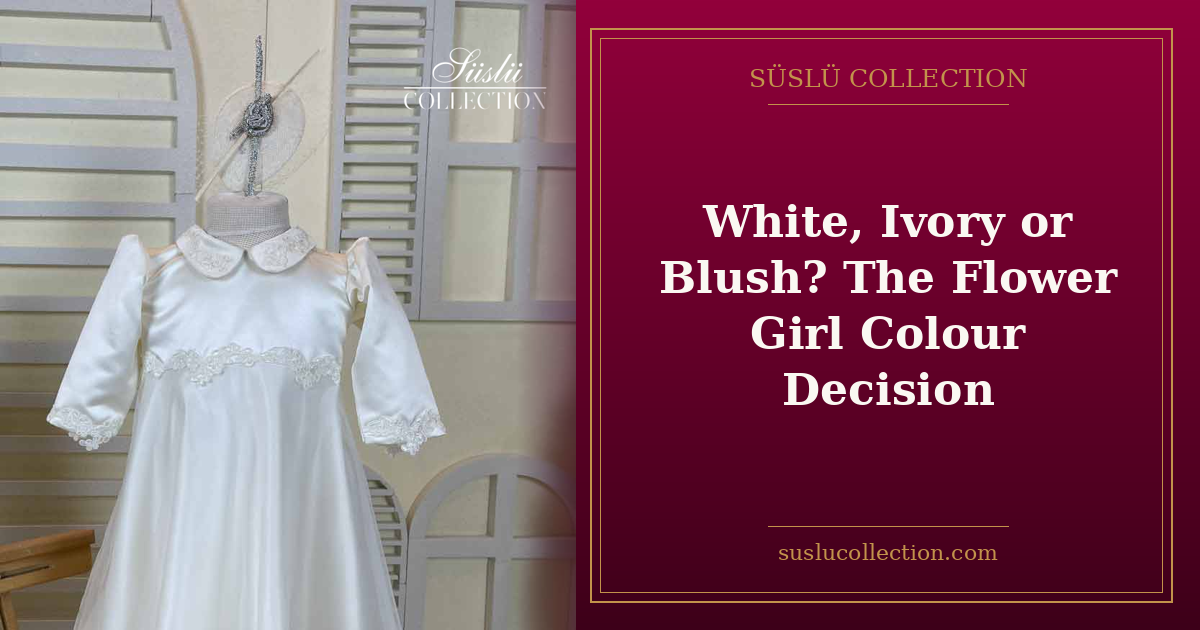
Should a flower girl dress be white, ivory or blush? Short answer: the referee is the never-compete rule — white with the bride’s blessing, ivory as the bridge in doubt, blush for full separation. 🎨
This guide introduces the five tones, weighs the two safe roads, and binds the decision to a four-step protocol.
The philosophy in one line: colour choice is a courtesy question, not an aesthetic one — and courtesy resolves in a single message. ✨
Main guide: flower girl dress guide · the meaning behind it: why girls wear white.
Five tones, five characters
The list opened the palette; this section gives each tone a face. The order is deliberate: left to right you move away from the bride — snow closest, pastel furthest. 🌈
No tone is “more correct”: each answers a different wedding question.
Whose tone is snow white?
The approved classicist’s: many brides ask for their small white escort themselves, and with that yes snow gives the album’s most timeless frame. It shines especially on cool skin tones.
Why is ivory the bridge?
It stays in the white family yet softly steps away from bridal white: hesitation’s elegant answer, and the natural friend of lace and warm skin — fabric background in the main guide.
What does blush promise?
Root-level separation: the permission question evaporates, the child’s skin warms, the bride’s white gains a gentle backdrop. The star of the year — the trends guide tells its rise.
Where does the pastel horizon end?
At the elegance dose: dusty lilac and sage colour a bridesmaid set; neon brights and dark evening shades sit outside the wedding’s language.
Does a henna or engagement night loosen the rules?
It does: those evenings own their own colour language — coral and warm pinks run free there; the wedding day returns to the palette.
Tones met. Now the two safe roads. 🛤️
Two safe roads: staying in white, stepping to pastel
The table drew the roads; this section reads which family belongs on which. Both are legitimate children of the never-compete rule — the difference is temperament. 🧭
The decision reduces to one question: classic continuity or relaxed separation?
Who does the white-family road serve?
The family with the blessing secured and a timeless album in mind: snow or ivory, a thin tiara, zero veil. Dose rules in the accessories guide.
Who does the pastel road relax?
The family that never wants to ask, and the large bridesmaid set: the blush-champagne gradient gathers different skin tones into one family.
What if the bride says “all in white”?
The matter is closed: the bride’s concept is the constitution. The three-way conversation — family, bride, atelier — locks the tone in one message; we gladly run it.
Can the two roads meet in one set?
Elegantly: flower girl in ivory, bridesmaids in a blush gradient — a two-layer frame in one language. Set mechanics in the custom guide.
How does a boy join the colour plan?
By tone bridge: bow tie and belt picked from the girls’ tone — the family frame keeps one language.
Roads split. Now the decision protocol. 🎯
The four-step decision protocol
The strip gave the protocol; this section runs it in the field. The order is deliberate: courtesy first, aesthetics second — no tone talk before the bride question closes. 📋
The four steps take one evening total and end weeks of indecision in one sitting.
How is the bride question asked?
In one kind message: “Would you think about the little one’s tone — white family or pastel?” Whatever the answer, you win: the direction is set.
How is the skin reading done?
The wrist test: veins looking greenish suggest warm skin (ivory-champagne), bluish suggest cool (snow-blush). A rough compass — the camera has the final word.
Why is venue light step three?
Because tone lives in light: a garden’s golden hour rewards champagne, a hall’s spotlight sharpens snow. Venue textures in the venue guide.
How does the daylight test speak last?
With one frame: two fabrics beside the child’s face at a window — the eye forgives, the camera votes. Two minutes, zero regret.
Why never trust a screen’s tone?
Every screen shows its own white: one photo becomes three tones on three phones — the last word always belongs to a fabric sample or the daylight frame.
Protocol run. Final section: colour at checkout. 🛍️
Colour at checkout: three checks, one shortcut
The colour decision must be verified on the product page too; this section gives the three colour-specific checks and the shortcut. The shared ground: a screen tone is a claim, a sample is proof. 🔍
The general seven checks live in the buying guide; these three are colour’s own.
Check one: is the tone named?
“White” is a family name, “snow white” or “ivory” is a tone: the page should write the tone by name — if not, ask, and note the answer speed too.
Check two: is there a daylight photo?
Studio spotlights equalise tones: a natural-light frame shows the true tone. Real customer photos are the gold standard.
Check three: is the set one tone?
Look for the tone-guarantee line: dress, tiara and socks from one maker in one tone — a white-on-white clash is unforgivable on camera.
Is asking for a fabric sample impolite?
The opposite — it is professionalism: a serious atelier posts samples with joy; a small swatch is the cheapest insurance on a big decision.
And the shortcut?
One message: write the bride’s answer and the venue to contact — a tone recommendation the same day, a fabric sample on request; the tones sit side by side in the collection.
The colour file closes: tones, roads, protocol, checks. Summary below. 🎀
🧵 Notes from the Atelier
The question that builds the most warmth is the bride question: families who worry “is it rude to ask?” get both the tone and peace of mind in one message — the courtesy question builds the relationship. Second note: the wrist-test party — two sisters comparing veins and giggling — is a sweet fitting classic; even a rough compass turns the talk the right way. Third: blush’s quiet climb continues every season; the city wedding that dislikes permission questions found its own answer.
📖 Quick Glossary
Never-compete rule: the referee of tone and dose. Ivory bridge: staying in white without rivalry. Three-way conversation: family-bride-atelier tone coordination. Wrist test: rough skin reading by vein colour. Daylight test: two fabrics, a window, one frame.
⚡ Quick Summary
The palette holds five tones: snow (approved classic), ivory (bridge), blush (full separation), champagne (golden light), the pastel horizon (set gradient). 🎨 Two safe roads exist — staying in the white family or stepping to pastel — both children of the never-compete rule. Decide in four steps: bride question, wrist test, venue light, daylight frame. At checkout look for a named tone, a natural-light photo and the tone-guarantee line.
🎯 Next Step
Write the bride’s answer and the venue to contact — tone recommendation same day, fabric sample on request; tones side by side in the collection.
Sıkça Sorulan Sorular
Can a child wear white to a wedding?
With the bride’s blessing, yes — many brides ask for their small white escort themselves. In doubt, ivory is the bridge that stays in the white family; a family that prefers never to ask separates fully with blush or champagne.
How do I choose a flower girl dress colour?
In four steps: ask the bride’s concept in one kind message, read the skin with the wrist test (warm skin: ivory-champagne, cool: snow-blush), weigh the venue light, and finish with the daylight test — two fabrics beside the child’s face at a window, one photo.
How are colours matched across a bridesmaid set?
By gradient within one tone family: for example flower girl in ivory, bridesmaids in a blush gradient — different skin tones gathered into one language. The set must come from one maker for the tone guarantee; the bride’s concept is always the constitution.
Kaynak: Wikipedia — White


