

Why Do Girls Wear White Dresses at Weddings?
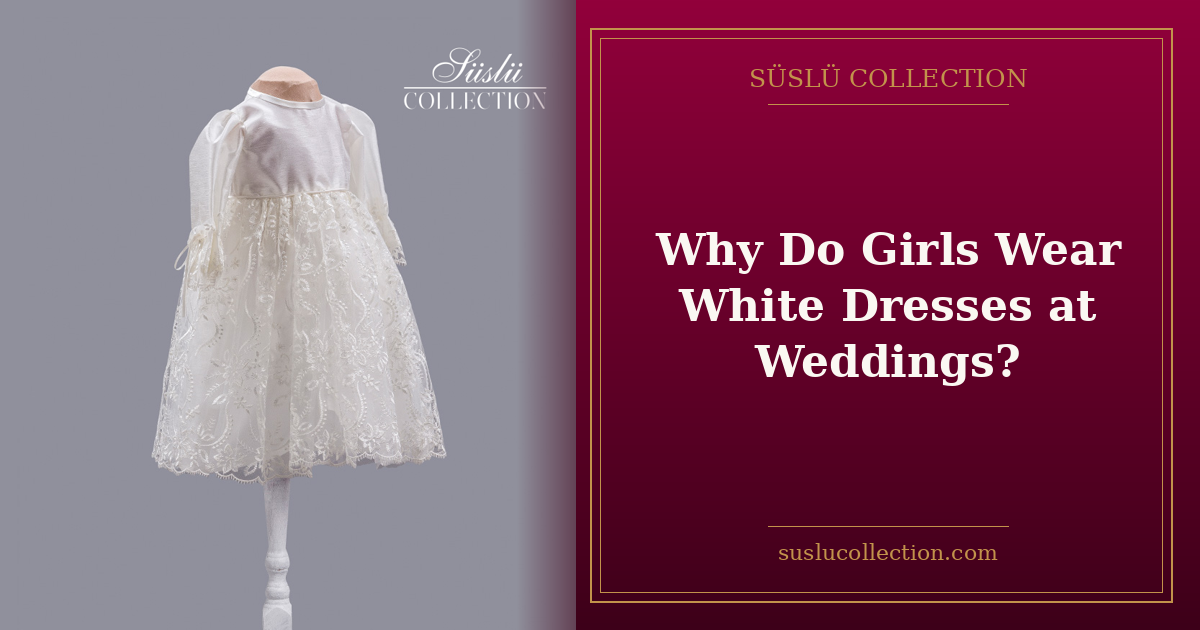
Why do girls wear white dresses at weddings? Short answer: an escort tradition running from blessing to album joy — the child is the hope sign who opens the bride’s path; not her copy. 🌸
This piece tours the tradition’s four stops, separates what the dress means from what it doesn’t, and clarifies the duty dictionary.
A relieving sentence up front: this is an invitation, not an obligation — a family that knows the meaning knows the dose. ✨
Main guide: flower girl dress guide · the full history: history of flower girl dresses.
Four stops: procession to album
The strip travelled time; this section pauses at the stops. The thread to follow: meaning predates the dress — children walked wedding trains long before the gown existed. 🏛️
The tour also explains why the tradition feels so natural today: four stops of repetition turn habit into language.
What did the child carry in ancient processions?
The wish: a child walking the train signalled blessing and new life — grain-scattering hands and petal-scattering hands are the same sentence in two eras.
What did the Victorian turn change?
The colour: as white bridal gowns spread, small white escorts followed — lace abundance and the camera fixed the little companions into the album. The full line runs in the history piece.
How did the flower girl institution settle?
Through the path-opening gesture: the child preparing a sweet road for the bride became the ceremony’s most beloved minute — its rehearsal is still the dressing guide’s business today.
What does today’s stop look like?
The line of joy: bridesmaid sets, ring bearers, procession little ones — the album’s warmest frames come from this line. The palace stage lives in the royal weddings piece.
Stops toured. Now the two columns of meaning. ⚖️
Meaning and non-meaning: two columns
The table split meaning in two, and the right column is the piece’s most calming part: the list of what the dress is not. Traditions collect myths; this section cleans them. 🧹
The left column first, with respect: blessing, escort, generation bridge, frame of hope — the wedding’s own language, woven into fabric.
What does the escort meaning mean in practice?
The child’s stage adorns the bride’s stage, never shades it: that is why the never-compete rule is a rule of meaning, not just aesthetics.
Where does the generation bridge appear?
Thirty years after the photo: today’s flower girl is tomorrow’s bride, and her album frame is the family story’s bridge stone — the heirloom dress is the bridge in fabric; the reuse guide tells it.
Why does the “not a copy” myth matter?
Because it sets the dose: a miniature bridal costume — veil, train, heels — is the tradition’s exaggeration, not its essence. A child’s gown is cut from the child’s pattern; the age gate guards exactly this.
If it’s not an obligation, what is the measure?
The family’s and the child’s joy: a child who wants the dress is the tradition itself; one who doesn’t becomes an elegant guest — both are right.
Columns read. Now the dictionary: who is who? 📖
The duty dictionary: five roles, five wardrobes
The list counted the roles; this section gives each role’s wardrobe signature. The rule is simple: duty sets the dose — as stage load grows, coordination grows. 🎭
The five roles share one constant: comfort first, one tone family, whispered shine.
What is the flower girl’s signature?
An ankle-length hem and a light basket: the walk minute wants free steps — the volume must have passed the dance test.
What does the ring bearer wear?
A girl takes a simple A-line, a boy a tone-bridged suit: the pillow asks for attention, the outfit stays quiet.
How does the junior bridesmaid differ?
By binding to the bridal team’s tone: 7-12 grace bridged to the adult bridesmaids’ colour — the young-lady threshold’s respectful language shines here.
Why is the guest child the freest?
Zero stage load: wide palette, flexible hour, early party clothes. The only limit is still the elegance dose — a wedding is a wedding.
Do boys share the tradition?
On the same escort line: as ring bearers and procession little ones — a tone-bridged suit carries the same meaning; wardrobe follows duty, not gender.
Dictionary done. Final section: binding meaning to today. 🌉
From meaning to decision: three practical takeaways
The tradition lands in three present-day decisions — the dressing decision, the dose decision, the keepsake decision — and this section closes all three in meaning’s light. 🎯
The shared ground: a family that knows the meaning looks at the child, not the catalogue.
How is the dressing decision made?
Together with the child: the one who spins and beams at the fitting makes the call herself. The tradition is an invitation — the dance test is its acceptance ceremony.
What is the compass in the dose decision?
The escort meaning: a tone that never competes, a whisper of shine, the child’s own pattern — three compass needles on one map in the main guide.
Why is the keepsake decision made today?
Because records start with a line: a name and date inside the skirt hem turns the dress into the family bridge’s first stone — the embroidery window lives in the custom guide.
And the first step?
One message: write the child’s duty and the wedding date to contact — the right family for the role, recommended the same day; the collection filters by duty type with real photos.
The meaning file closes: stops, columns, dictionary, takeaways. Summary below. 🎀
🧵 Notes from the Atelier
The sentence we hear most at fittings belongs to a child: “am I like the bride too?” — and the loveliest parent answer is always the same: “you are the one who opens the bride’s path.” The escort meaning taught in a single sentence. Second note: families who read the duty dictionary solve their dose questions on their own; when the role clears, the wardrobe clears. Third: respect for the child who declines — every family that switched to guest elegance came home happy; the tradition is an invitation, never an imposition.
📖 Quick Glossary
Procession: the wedding train. Flower girl: the petal-scattering path-opener. Ring bearer: the pillow’s small courier. Escort meaning: adorning without shading. Generation bridge: today’s flower girl, tomorrow’s bride.
⚡ Quick Summary
The tradition passed four stops: the ancient train’s blessing child, the Victorian turn’s small white escorts, the flower girl institution, today’s line of joy. 🌸 The meaning stands on four columns — blessing, escort, generation bridge, frame of hope — and carries four myths nowhere: copy, miniature adult, obligation, show. Five roles each carry a wardrobe signature; the dose compass is always the escort meaning, the acceptance ceremony always the dance test.
🎯 Next Step
Write your child’s duty and the date to contact — the right family for the role, same day; the collection filters by duty.
Sıkça Sorulan Sorular
Why do girls wear white dresses at weddings?
From a blessing-and-escort tradition: in ancient wedding trains children were signs of hope for the new life; the Victorian era’s white bridal gown created small white escorts, and the flower girl institution carried it to today. The child opens the bride’s path — she is not her copy.
What is the difference between a flower girl and a junior bridesmaid?
The flower girl (3-8) scatters petals on the bride’s path and needs an ankle hem and light basket; the junior bridesmaid (7-12) joins the bride’s team in a graceful A-line, tone-bridged to the adult bridesmaids.
Does a child have to wear a white dress at a wedding?
No — the tradition is an invitation: a child who spins and beams at the fitting decides for herself; one who prefers not to becomes an elegant guest, and both are right. The measure is the family’s and the child’s joy, not the catalogue.
Kaynak: Wikipedia — Flower girl
Flower Girl Dresses
Browse Products


