

Reusing a Christening Gown: The Handover Guide

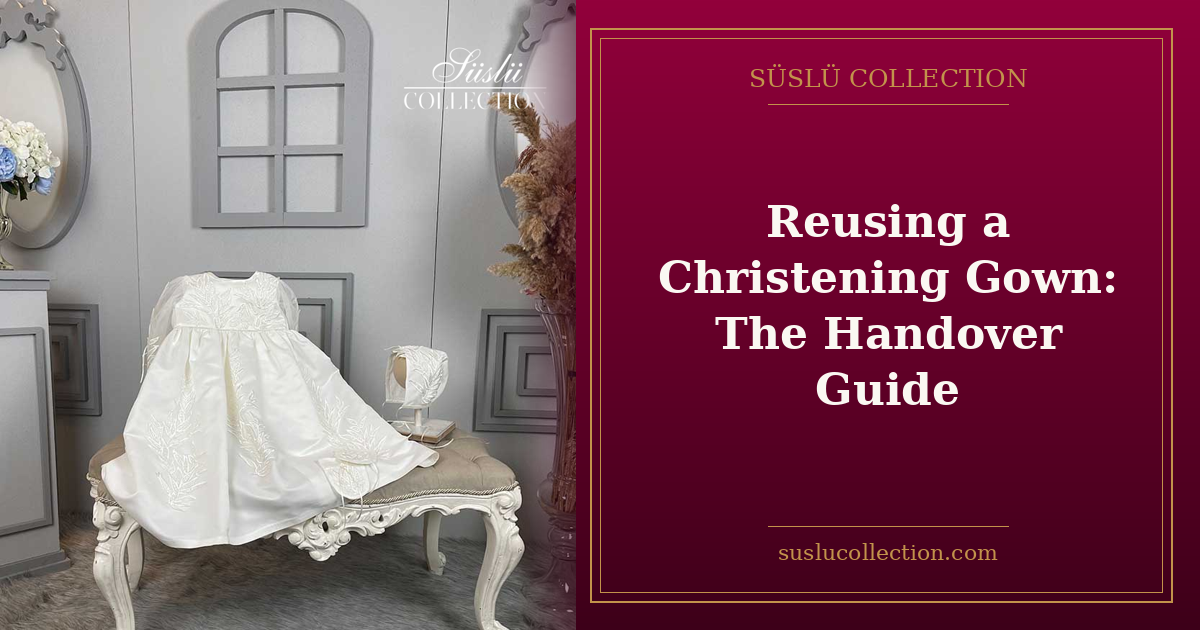
The gown in the box waits for its second baby — so how is an heirloom worn again? Short answer: through a planned handover — survey, care, fitting, renewal touch. 🔄
This guide builds the handover’s five steps, weighs the heirloom-or-new scale honestly, and draws the done-and-not-done boundaries of alteration.
This is the collection’s closing link: the box that the storage guide put away, this guide reopens. ✨
Master guide: the christening outfit guide · the previous link: how to store.
The five-step handover
The strip laid the process; this section enlarges the timing and two critical steps. The master rule is the calendar: the box opens 4-6 weeks before the ceremony — care and alteration eat days. ⏳
The early opening’s logic is plain: surprise is the calendar’s enemy; a problem seen early is a small job.
What does the inspection look for?
Four marks: yellowing, stains, tears and loose threads, thinning delicate zones. In daylight, two passes inside and out — findings photographed, the road map built on those frames.
How is the care decision made?
By the findings, through three doors: cleaning only (staged baths), repair only (panel and motif), or both. The yellowing technique is in the storage guide; repair boundaries below.
Why is the fitting its own step?
Because the heirloom’s size is fixed and babies vary: the fitting turns alteration from guess to measurement. Technique in the sizing guide; loose-cut gowns usually pass untouched.
What is the renewal touch?
The gown’s hello to its new baby: the new name-date embroidery goes in, the ribbon is refreshed. The register thickens — exactly the home edition of the royal tradition.
Handover built. Now the honest question: heirloom or new? ⚖️
Heirloom or new? The honest scale
The table set the two pans; this section teaches how to read them. The principle first: this is no contest — both pans sit inside the same tradition. 🤝
The short reading: an heirloom that exists and can carry the rite takes priority; absent or tired, the new gown opens the register’s first page.
What does “able to carry” mean?
Three conditions: the fabric bears the ceremony’s weight, the yellowing yields to cleaning, the size gap sits within alteration range. Three yeses and the heirloom is ready for duty.
Should a tired heirloom be forced?
No — the royal lesson lands exactly here: the delicate original retires with honour, the story continues in a new piece. The tired gown withdraws to box or display; the new gown takes the flag.
Can the two pans combine?
Gracefully: the new gown is worn, and one piece of the heirloom — a ribbon, a lace strip, a button — is stitched into it. The “piece of the past” touch joins two generations in one fabric.
How is tomorrow considered when buying new?
Through the heirloom trio: loose cut, natural fibre, repairable lace. The trio stands flagged in the collection; the choosing guide is the model map.
Scale read. Next, the craft chapter: alteration boundaries. ✂️
Alteration boundaries: the craft’s done-and-not-done map
The list drew the map; this section deepens three items. The alteration’s golden principle: the gown updates while its identity stays — an heirloom must remain an heirloom through renewal. 🧭
Knowing the boundaries protects the family too: knowing what is possible shrinks the proposal-and-timeline talk to minutes.
How far can fold lines move?
As far as the cut allows: in loose gowns a size or two of play is the safe band. Beyond the allowance means forcing — and there the scale is read again.
Does panel replacement break identity?
Done right, no: the worn lace panel is replaced with its closest texture, and the original panel is archived in the box. The change stays invisible, the record never lost.
Is the new embroidery stitched beside the old?
Below it, in line: that is the register’s logic — names flow chronologically, none erased. The stitching journey is in the custom guide.
Why is radical restyling in the caution column?
Because it cannot be undone: turning a gown into a suit erases the heirloom’s identity. The exception is a family’s conscious decision — even then, talk to us first and let the original be documented.
Boundaries drawn. Closing: reuse’s bigger picture. 🌱
The bigger picture: one gown, many ceremonies
Reuse is not mere thrift; it is a three-way gain: family memory, sustainability, depth of meaning. This closing completes the picture. 🖼️
And the picture joins the whole collection into one circle: choose → celebrate → box → hand over → new ceremony.
How does family memory accumulate?
Name by name: each christening’s added stitch turns the gown into a fabric census. Three generations on, the box is the family’s most precious archive.
What does the sustainability side say?
The plain truth: one well-made gown living many rites is the most natural environmental decision. That is why 2026’s heirloom wave sits at the centre of the trends guide.
How is the cousin-lending routine arranged?
By three rules: the handover steps run in full, cleaning happens at both ends, and a new stitch joins only with the owning family’s blessing. Lending widens the register — never breaks it.
Where does the circle begin today?
At two doors: a family with a boxed heirloom builds the handover; a family without one picks its first heirloom-friendly gown from the collection. On both roads contact walks beside you — survey to stitch, one workshop.
The collection’s circle closes: from choosing to handover, every link in this archive. Summary below. 🎀
🧵 Notes from the Workshop
The handover’s loveliest moment is the fitting: the heirloom gown settling onto its new baby draws the same sentence from every grandmother — “same gown, same grace.” Second note: the “piece of the past” touch — the heirloom’s ribbon stitched into the new gown — is the season’s most requested job; it reconciles the two pans. Third: boxes opened 4-6 weeks early see almost no crises, while late boxes turn into express-care marathons — the calendar is the heirloom’s best friend.
📖 Quick Glossary
Handover: preparing the heirloom for its new baby. Able to carry: the fabric-yellowing-size triple test. Piece of the past: a detail carried from heirloom to new gown. Fabric census: the family record built in embroidery lines. Panel archive: the replaced original lace kept in the box.
⚡ Quick Summary
The handover is five steps: box opening 4-6 weeks early, an inspection in light, the care decision, the fitting on the new baby, the new stitch and fresh ribbon. 🔄 The scale is honest: a carrying heirloom takes priority, a tired one retires with honour, and a new gown is chosen as tomorrow’s heirloom. Alteration boundaries are clear: fold play and panel replacement done, identity-erasing restyling and bleach never. The big picture: one gown, many ceremonies — memory, sustainability, meaning.
🎯 Next Step
Open your box this week: send the photographed survey via contact — cleaning, alteration and the new stitch in one workshop; and for the register’s first page, the collection stands ready.
Sıkça Sorulan Sorular
Can a christening gown be reused?
Yes — through a planned handover: the box opens 4-6 weeks before the ceremony, the gown is inspected in light, the cleaning-repair decision is made, the new baby is fitted, and the new name embroidery readies it for duty.
Should the heirloom be worn or a new gown bought?
A carrying heirloom takes priority: sound fabric, cleanable yellowing, a size gap within alteration range. A tired heirloom retires with honour, and the new gown is chosen with the heirloom trio — loose cut, natural fibre, repairable lace.
What alterations can an heirloom gown take?
Letting out or taking in at fold lines, replacing a worn lace panel (the original archived), and adding a new name-date stitch. Identity-erasing radical restyling needs a conscious family decision; bleach is never used.
Kaynak: Wikipedia — Sustainability


