

Personalised Name-Embroidered Keepsake Box: Step by Step
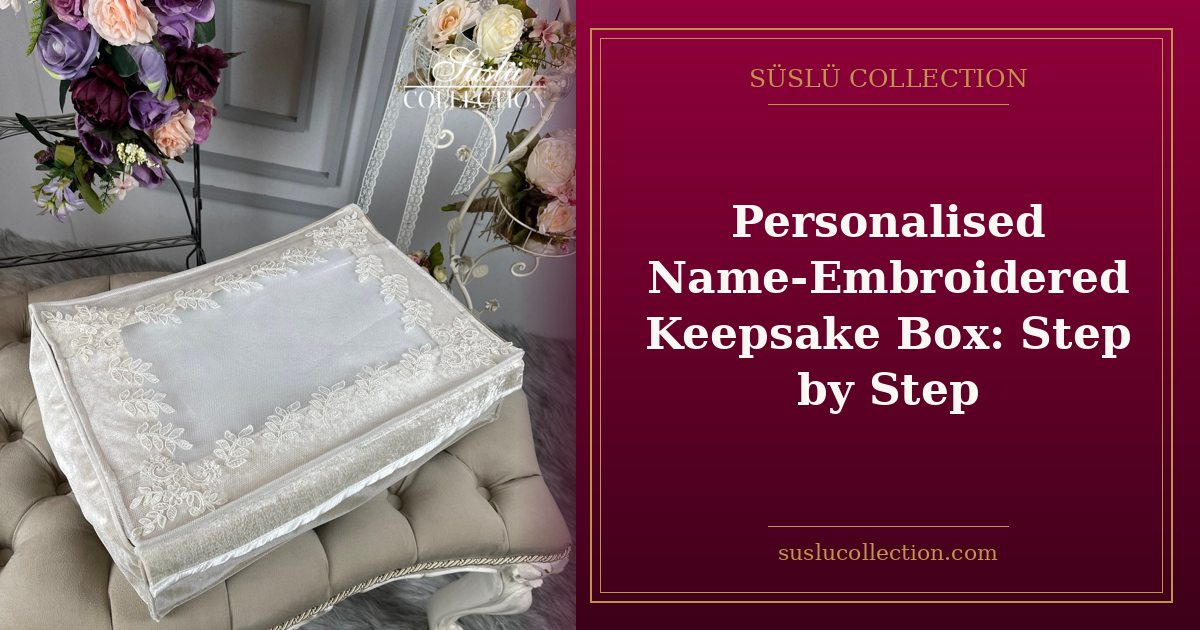
How is a personalised name-embroidered keepsake box made? Short answer: decide the text, placement, lettering and thread colour; approve the draft letter by letter, then it’s stitched — the process takes about two to three weeks. ✍️
This piece covers the four embroidery decisions, script versus block letters, the five stops of an order and the most common mistakes.
Name embroidery turns a box from a box into someone’s box: the child who opens it years later sees their own name first. ✨
Main guide: christening keepsake box guide · choosing a style: box styles.
Four embroidery decisions
The list set out the decisions; this section opens each one’s trick. They all tie to one principle: embroidery isn’t decoration, it’s a signature — it should be read, never date, and speak with the fabric. 🪡
The four decisions take an evening; the rest is the atelier’s work.
What text is embroidered?
Most often the child’s name and ceremony date. Some families prefer initials only, others the christening name and the church. Short text always looks more elegant.
Where does embroidery go?
The centre of the lid is the most visible spot; the lower front gives a subtler effect. Adding a small note or date inside the lid becomes a special surprise for whoever opens it.
How is lettering chosen?
By fabric and length: script is very elegant for short names, while block letters are more legible for long name-surname-date combinations.
What thread colour?
The fabric’s own tone or one shade darker gives the quietest, smartest result. Gold and silver thread shine in the light and add festivity; on white fabric, beige or grey thread is also elegant.
Is a motif added?
It can be: a small flower, a branch, a cross or a heart. The motif should stay small beside the name; two large elements side by side look crowded.
How is a bilingual name written?
The child’s everyday name on the lid, the christening name or its spelling in the second language inside the lid: the two texts don’t compete on the same surface, and each is read in its own place.
The decisions are done. Now lettering. 🔤
Script or block letters?
The table set the two styles side by side; this section says which suits whom. The deciding factors are text length and fabric texture. ✒️
Seeing both at the draft stage makes the decision easier.
When does script win?
A short name on velvet or flat satin: curving letters give an emotional, handmade feel.
When do block letters win?
When name, surname and date are written together, or the ground is quilted: crisp letters read even between the squares.
Can the two be combined?
A lovely solution: the name in script, the date in small block letters. A hierarchy forms, and the eye sees the name first.
How is letter size set?
A text area about a third of the lid’s width usually looks balanced; very large letters turn the box into a sign.
What about special characters?
Accented letters such as Ç, Ğ, İ, Ö, Ş, Ü or é, å, ö must be checked in the draft: some typefaces lack dotted or accented letters or render them differently.
Lettering is chosen. Next, the order path. 🛤️
Five stops of a personalised box
The strip listed the stops; this section explains the family’s and the atelier’s work at each. The rule: every stop locks something in — no surprises remain at the end. 🚉
The family’s work is small but critical: the brief, draft approval, photo approval.
What does a good brief include?
The name and date (with spelling), fabric and colour preference, any motif, and the ceremony date. A photo of the christening outfit makes harmony easier.
Why does the draft matter?
It shows how the embroidery will sit on the box: placement, size and lettering at a glance. Changes at this stage are free and easy.
Why is approval letter by letter?
Once stitched, embroidery can’t be undone: a single wrong letter means remaking the whole box. Reading the name aloud, letter by letter, is the safest method.
How long do embroidery and assembly take?
One to two weeks depending on size and trim; a good atelier sends progress photos and reports any delay the same day.
What does the photo check ensure?
The final gate: the finished box is photographed in daylight and shipped on your approval. If you have an objection, it’s fixed before the box leaves.
The stops are done. Last section: common mistakes. ⚠️
Common mistakes and fixes
Most mistakes with personalised boxes come from squeezing into the last week. This section gives the five most common mistakes and simple fixes. 🛠️
All tie to one sentence: start early, approve letter by letter.
Ordering late
Asking for an embroidered box a week before the ceremony squeezes the timeline. Fix: brief at least two to three weeks ahead. The calendar is in the when to prepare piece.
Spelling errors
Especially with bilingual names and christening names: use the spelling on the official document, and have two people read the draft.
Too much trim
Name embroidery, big lace, a bow and pearls on the same lid: the eye tires and the name gets lost. The one-focus rule applies here too.
Thread that clashes with fabric
Shiny thread on glossy satin sometimes can’t be read: seeing the thread colour against a fabric photo in the draft prevents this.
Date format
Day-month-year order may not be read the same way by everyone in the family: writing the month in words (e.g. 14 September 2026) avoids confusion.
Where to begin?
Write your name, date and fabric preference via contact — a draft the same week; models in the keepsake box collection.
The embroidery file closes: decisions, lettering, stops, mistakes. Summary below. 🎀
🧵 Notes from the Atelier
The stage we’re thanked for most with embroidered boxes is the draft: families want to see the box before it’s sewn, and that trust changes everything. Second note: families who ask for the name in script and the date in block letters choose the most balanced lids. Third note: adding a hidden date or a short line inside the lid has become the most loved request in recent years.
📖 Quick Glossary
Brief: the order message with name, date, fabric and wishes. Draft: the visual layout of the embroidery on the box. French embroidery: fine, raised hand embroidery. One focus: only one element leading on the lid.
⚡ Quick Summary
Four embroidery decisions: text, placement, lettering, thread colour. ✍️ Script for short names, block letters for long text; the two can be combined. Five order stops: brief, draft, letter-by-letter approval, embroidery and assembly, photo check. The process takes two to three weeks; the most common mistakes are late orders, spelling errors and too much trim.
🎯 Next Step
Write your name, date and fabric preference via contact — a draft the same week; models in the keepsake box collection.
Sıkça Sorulan Sorular
Where is name embroidery placed on a keepsake box?
The most common place is the centre of the lid; the lower front can be chosen for a subtler look. Adding a small date or note inside the lid makes a special surprise for whoever opens it.
How long does a name-embroidered box take?
With brief, draft, approval, embroidery and assembly, and a photo check, it takes about two to three weeks on average. Ordering at least two to three weeks before the ceremony is recommended.
How can spelling errors be avoided?
Use the spelling on the official document, have at least two people read the draft letter by letter and check accented characters especially carefully. Since stitched embroidery can’t be corrected, the approval stage is critical.
Kaynak: Wikipedia — Embroidery
Christening Keepsake Box
Browse Products


