

Wedding Veil or Bridal Hat? An Honest 5-Question Comparison

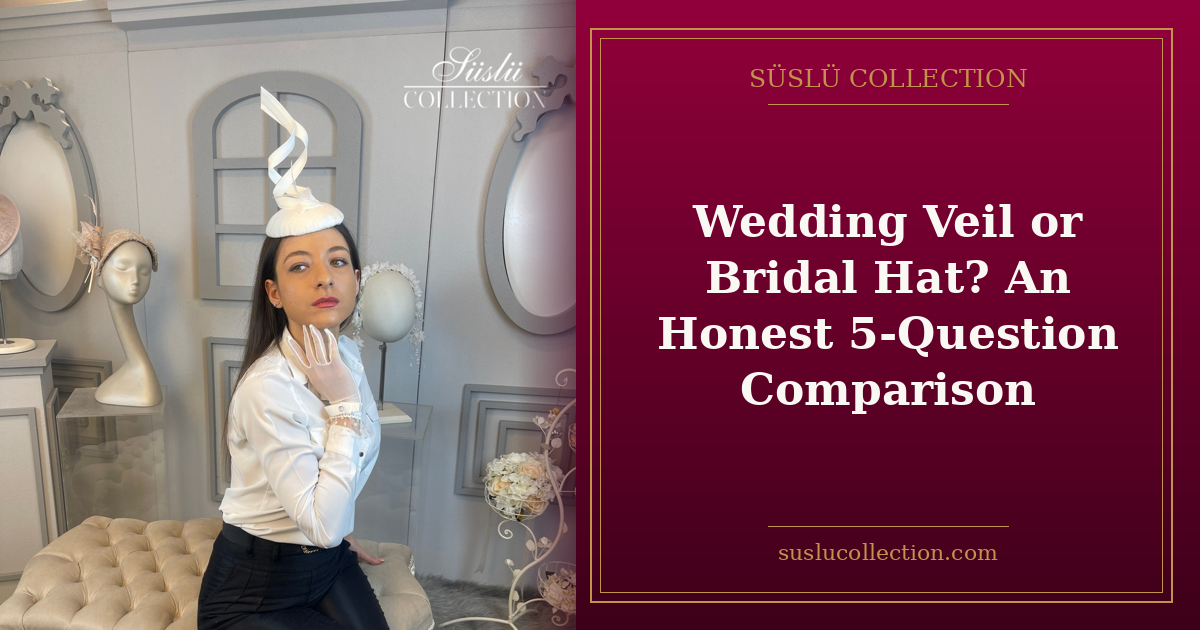
The most classic head-to-head of wedding prep: veil or bridal hat? One carries a century of tradition, the other carries modern minimalism. 🤍
The wrong frame is “which is prettier” — both are beautiful. The right frame is which belongs to your wedding: dress, venue, weather and your own comfort decide.
This guide runs the comparison on five practical questions, then opens a third door most brides never consider: wearing both. Ten minutes, one confident answer. ✨
Main guide: the wedding hat guide · style basics: which style is which.
What does each piece actually say?
Before comparing prices or fittings, hear the language: a veil and a hat tell two different stories from the same head. 📖
The table above holds the core contrast; the story below holds the feeling — because on the day, feeling outranks features.
What story does the long veil tell?
Ceremony, lineage, drama: tulle flowing past the shoulders is the classic bridal silhouette. In grand ballrooms and church aisles it fills the frame like scenery.
What story does the bridal hat tell?
Choice, confidence, editorial chic: a birdcage headpiece frames the face and sharpens the portrait. City registry offices and intimate venues are its natural set.
Does one read “more bridal”?
No — the bridal signal comes from white plus ceremony context, not from length. A white netted headpiece reads bride instantly; guests avoid white for exactly that reason.
Can the hat carry the face-covering moment?
Yes: eye-level or full-face netting gives the veil-lift moment in miniature. The gesture survives; only the metres of tulle retire.
Stories heard. Now the practical engine: five deciding questions. 🔍
The five questions that settle the choice
Endless scrolling will not decide this; five questions will. Answer honestly and the winner names itself. ✅
Run them in order — dress first, because the head accessory is the dress’s reply, never a solo act.
What does your dress vote for?
Princess volume and cathedral trains call the long veil; straight cuts, midis and suits call the hat. Match drama with drama, clean line with clean line.
What does the venue vote for?
Open air and coastal wind turn long tulle into a sail; short netting stays composed. Indoors with high ceilings, the veil regains its stage.
What does the timeline vote for?
A veil wants helping hands at every doorway; a headpiece is fixed once and forgotten. Long party, few helpers: the hat wins on logistics alone.
What does the day after vote for?
The veil retires to a box; the hat begins a second life — receptions, christenings, race days. The full second calendar is in re-wearing your wedding hat.
Scores tallied? If they tie, the next chapter is yours: both. 🎭
The third door: wearing both in one day
The best-kept secret of modern weddings: this is not an either-or exam. The three-act plan above lets one bride wear two stories. 🎬
The logic mirrors the two-dress tradition: ceremony formality first, party freedom after. The head simply follows the same script.
How does the transition work?
After formal photos, the veil comes off with the stylist’s help; the pre-fitted birdcage headpiece goes on in under five minutes. Guests see a reveal, not a repair.
Do the two pieces need to match?
They need to agree, not twin: same white family, same finish (matte with matte, sheen with sheen). One shared detail — a pearl, a lace echo — ties the acts together.
Is the double budget worth it?
Split the roles and each piece can be simpler: a plain veil plus a fine headpiece often costs less than one heavily-worked veil. Browse both roles side by side in the veil collection.
Who should skip the double plan?
Brides who hate mid-day changes: if touch-ups stress you, choose one piece and peace. The plan serves the bride, never the reverse.
Three doors, all open. Last stop: etiquette fine print for family and guests. 📜
Etiquette fine print: who may wear what?
Your choice ripples outward: mothers, witnesses and guests will ask “then what do we wear?” The answers are short and kind. 🤝
One law rules them all: the bride owns the spotlight — everyone else dresses one notch quieter.
May the mothers wear hats?
Warmly yes: a mid-size hat or veiled pillbox is the classic mother-of-the-bride crown. Colours stay off white and cream; tones harmonise with the bride’s palette.
May a guest wear netting?
Yes, at eye-level or shorter — full-face netting is the bride’s gesture. Mid-size fascinators keep guests elegant and safely below the statement line.
What about church weddings?
Head-covering tradition welcomes hats for all women; the order of service and the rules live in the church etiquette guide.
Where do questions go?
To us: send the dress photo and the venue through contact, and we will answer veil, hat or both for your exact case — usually the same day.
Fine print done. The verdict, the glossary and your next step close the file below. 🎀
🧵 Notes from the Atelier
Our honest tally after years at the mirror: brides who try the birdcage headpiece after the long veil almost always smile wider — the face suddenly has a frame. Second note: the two-piece plan fails only when nobody rehearses the switch; give the stylist one practice run and the reveal lands perfectly. Third: mothers apologise for “stealing” elegance far too often — a veiled pillbox on the mother makes the family album richer, never poorer.
📖 Quick Glossary
Cathedral veil: the longest tier of traditional veils. Birdcage netting: short face-framing veil on a headpiece. Reveal: the mid-day switch from ceremony look to party look. Finish: a fabric’s surface character — matte or sheen. Statement line: the invisible limit guests stay below.
⚡ Quick Summary
Veil and bridal hat are two languages, not two ranks: tradition-drama versus modern-chic. 🤍 Five questions decide — dress, venue, wind, logistics, second life. Ties open the third door: veil for the vows, birdcage for the party, one shared detail linking both. Etiquette stays simple: white is the bride’s, full-face netting is the bride’s, everyone else dresses one notch quieter.
🎯 Next Step
Test your answer against real pieces: the veil collection shows both roles, and contact turns a dress photo into a same-day recommendation. Undecided on style families first? Re-read which is which.
Sıkça Sorulan Sorular
Can a bridal hat fully replace the wedding veil?
Yes — at civil ceremonies and modern weddings the birdcage headpiece is a complete substitute, giving the face-covering gesture without metres of tulle.
Can I wear both a veil and a hat at my wedding?
Yes, in sequence: the long veil for the ceremony and photos, the birdcage headpiece for the party. Keep both in the same white family and rehearse the switch once.
Is a hat with netting appropriate for a wedding guest?
Yes, if the netting stays at eye level or shorter and the colour avoids white and cream. Full-face netting remains the bride’s gesture.
Kaynak: Wikipedia — Wedding veil


