

Reusing a Flower Girl Dress: Four Routes, One Ritual

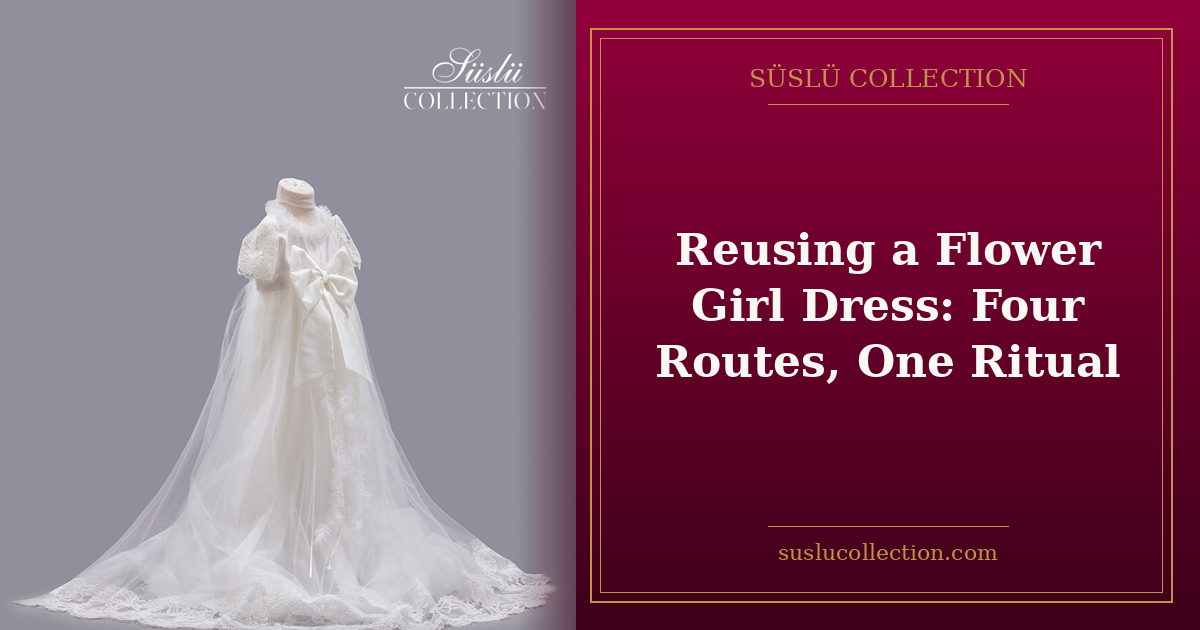
Can a flower girl dress be reused? Short answer: yes, along four routes — sister, cousin, stage and heirloom; the condition is proper storage, the method the five-step handover ritual. 🔄
This guide draws the four routes, reads the fit signs in two columns, and runs the handover ritual step by step.
Economy and meaning shake hands here: a re-worn dress is both budget and story — every ceremony adds a line to its record. ✨
Main guide: flower girl dress guide · the precondition: storage guide.
Four routes: from box to new stage
The list drew the routes; this section adds the road notes. The routes share one gate: a well-stored dress — the gate is built in the storage guide. 🗺️
Route choice belongs to the family; a dress ready for all four grants full freedom.
Why is the sister route the shortest?
The measurements and tone knowledge live at home: the dress’s history is known, its alteration record kept — a small dart solves most handovers.
What does etiquette say on the cousin bridge?
An open-hearted loan: the dress’s condition and return expectation are spoken upfront — a well-built bridge links family albums; tone harmony is re-checked with the daylight test at the new wedding.
What does the stage route cover?
Elegance beyond ceremony: piano recitals, balls, graduations, holiday frames — the white family is noble on stage too; the shine dose loosens one notch per stage.
When is the heirloom route chosen?
At checkout: the heirloom package — generous cut, alteration-ready seams, acid-free box — sets the dress on the “for my daughter’s daughter” road; the package in the custom guide.
Routes drawn. Now the fit examination. 🩺
The fit examination: the dress looks at the new child
The table split the signs; this section runs the examination. The gaze reverses, and that changes everything: the child is not measured for the dress; the dress is measured against the child — the fabric is the fixed point. 🔍
The examination takes five minutes: four easy signs, four hard signs, one decision.
Why is the generous cut the golden sign?
It carries flex allowance: a sashed waist and roomy body swallow up to a size of difference with a dart — classic cuts being handover champions is no accident; the styles guide introduces those families.
How is hem allowance checked?
At the inner fold: a pressed hem allowance opens; without one, length alteration is limited — at walking age the ankle rule still holds; the measuring guide explains reverse measuring.
Why is a full size the limit?
Alteration physics: a dart swallows one size, never two — in narrow patterns the limit sits even closer. Past the limit, the route changes: stage use or the heirloom wait.
Can worn tulle be rescued?
By degree: a small pull is repaired, widespread wear asks a layer change — cost is asked with a photo; three frames to contact suffice.
Examination done. Now the ritual itself. 🎗️
The handover ritual: five steps, a new ceremony
The strip lined the ritual; this section runs it. The word ritual is deliberate: a handover is a family moment, not a technical job — the box opening, the first try-on, the embroidery line; all enter the album. 📸
The calendar star you know: start four to five weeks before the new ceremony, finish box-one-week-early.
Why open four to five weeks early?
So three windows fit: airing + alteration + the new fitting — a tight opening stacks all three; calendar discipline is the timing guide’s sibling subject.
What changes in reverse measuring?
The order: first the dress’s three measurements, then the child at the same points, the difference becoming the alteration list — the up rule’s handover version asks “is the gap within the dart limit?”
What does the embroidery line add?
The record: a new name and date inside the skirt turns the dress into a chain of wearers — a two-line dress is a family document; adding a line is small work in the custom lane.
Why is a new dance test mandatory?
Approval belongs to the child, not the dress: two spins, sitting, the itch scan, stairs, the smile — five points run again with the new owner; the test in the volume guide.
Ritual run. Final section: the handover economy. 💰
The handover economy: numbers plus story
Reuse pays two accounts at once; this section totals both honestly — the budget account and the story account. Both open on the first order day. 🧮
The formula is short: the right choice at the first order = a small alteration cost at the second ceremony.
What does the budget account say?
The second ceremony is nearly free: in a well-stored classic dress the handover cost is one small alteration — the “cheap” price of single-day fabric grows expensive through the impossible second ceremony; the fabric lesson in the buying guide.
How does the story account grow?
Line by line: every wearer a name, every ceremony a date — ten years on, the dress out of the box is the family album’s fabric volume.
Which three first-order choices build the handover?
A classic body (never dates), a generous or sashed cut (flexes), the heirloom package (seams + box) — all three fit in one order sentence: “we want it to carry to a second ceremony.”
Shall we build your handover plan?
One message: send the dress’s photo and the new child’s three measurements to contact — the fit examination and alteration plan the same day; handover-born models wait in the collection with the heirloom-package option.
The handover file closes: routes, examination, ritual, economy. Summary below. 🎀
🧵 Notes from the Atelier
The atelier’s favourite message type is the two-name skirt photo: the sister’s line added under the elder’s — fabric turning into a family record. Second note: families who say “we want it to carry” on order day always pass the handover with one small alteration; the formula genuinely works. Third: the stage route grew faster than we expected — piano-recital frames now rival wedding frames; the white family loves a stage.
📖 Quick Glossary
Handover ritual: five steps from box opening to new fitting. Reverse measuring: the dress fixed, the child measured against it. Dart limit: the maximum gap an alteration swallows. Chain of wearers: the name-date lines inside the skirt. Stage route: elegance beyond ceremony.
⚡ Quick Summary
Four routes: sister (shortest), cousin bridge (open-hearted loan), stage (balls-recitals-graduations), heirloom (the waiting box) — all gated by proper storage. 🔄 The fit examination looks in reverse: the dress fixed, the child measured; generous cuts and hem allowance ease it, a full size is the limit. The ritual runs five steps: early opening (4-5 weeks), reverse measuring, alteration, the embroidery line, a new dance test. The economy is built at the first order: classic body + generous cut + heirloom package.
🎯 Next Step
Send the dress photo and new measurements to contact — fit examination the same day; handover-born models in the collection.
Sıkça Sorulan Sorular
Can a flower girl dress be worn again at another ceremony?
Yes, along four routes: a sister’s wedding (the shortest road), an open-hearted loan to a cousin, stage use at balls, recitals and graduations, and the heirloom route waiting in its box. The precondition is proper storage: an acid-free box and solved stains.
How is an older sister’s dress fitted to the younger one?
By reverse measuring: the dress’s three measurements are taken, the sister measured at the same points, the gap turned into a dart-hem-sash alteration. A dart swallows one size; a pressed hem allowance lengthens the skirt — the box opens 4-5 weeks before the new ceremony.
What should we request at ordering so the dress can be reused?
Three choices: a classic body (doesn’t date), a generous or sashed cut (flexes), and the heirloom package — alteration-ready seams plus an acid-free box. One sentence suffices: ‘we want it to carry to a second ceremony’; the inside-hem embroidery also starts the chain of wearers.
Kaynak: Wikipedia — Sustainable fashion


