

Children at Royal Weddings: The Palace Frame’s Formula

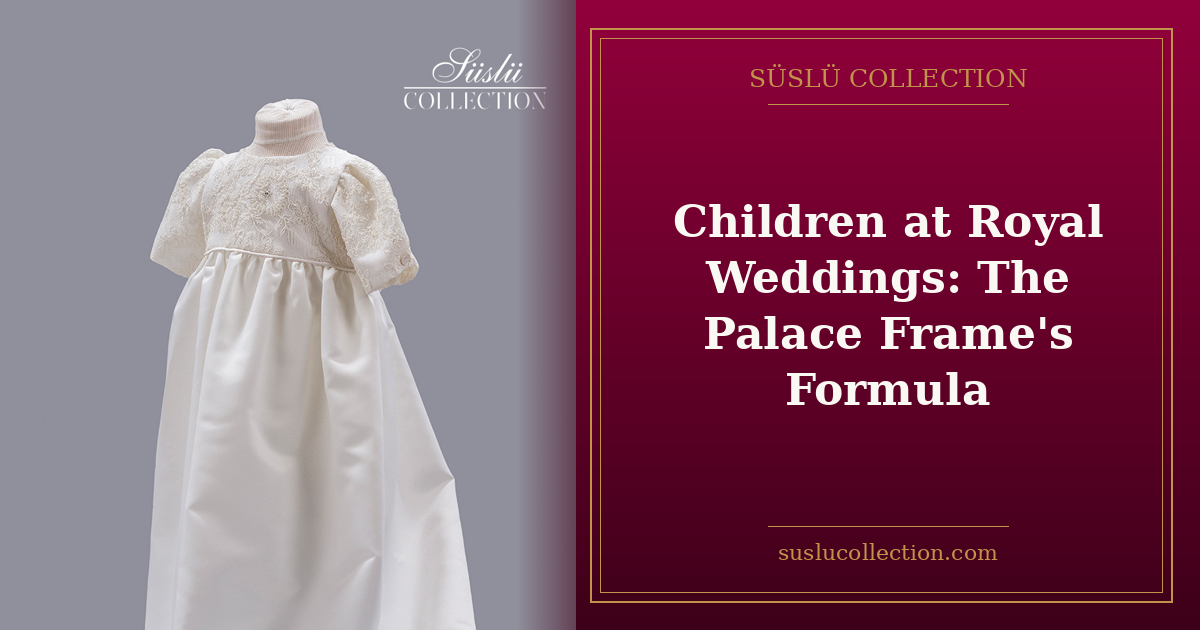
Why are children at royal weddings so memorable? Short answer: graded procession + whispering tones + natural moments — the palace frame’s formula is a trio, and all three travel to a home wedding. 👑
This piece watches the palace scene’s four acts, separates the lessons to take from the weights to leave, and translates five quiet lessons into your own wedding.
The measure upfront: the palace gives inspiration, not scale — take the formula, leave the protocol. ✨
Main guide: flower girl dress guide · history context: history of flower girl dresses.
Four acts: palace to screen
The strip opened the acts; this section tells the play. The red thread is media: the palace wedding married each era’s most powerful broadcast tool — from lace engravings to television to the phone. 📺
That marriage shaped the child’s dress twice: first it set the fashion, then it globalised it.
How did Victorian courts set the fashion?
By visibility: the court’s laced little bridesmaids travelled into the era’s engravings, and middle-class weddings copied the frame — the 1840 turn’s accelerator was the palace.
What did the television age change?
The scale: millions watched the same flower girl frame at once — little-bridesmaid fashion crossed continents in one broadcast for the first time.
What did the social media act add?
Speed and naturalness: the most shared palace frames became the imperfect ones — the yawning child, the escaping shoe, the honest laugh. Naturalness became the era’s aesthetic.
Why are no real names mentioned here?
By choice: frames endure by their formulas, not their names — this piece tells the method, not the gossip; the formula works at every wedding.
What is the acts’ shared lesson?
The frame’s power: your wedding’s child frame is your family’s “broadcast” too — worth learning the formula; the next sections do exactly that.
Acts closed. Now the sieve: take and leave. ⚖️
The take-and-leave sieve
The table built the sieve; this section justifies it. The separator is one question: does this element beautify the frame or carry the protocol? What beautifies is taken. 🔍
The left column holds four lessons — all four shrink to home scale; the right holds four weights — all four stay at the palace.
How does the graded procession shrink to a home?
With two or three children: a small procession lined by height carries all the grace of a ten-child palace order — grade setup in the custom guide’s set section.
Why is the cream axis a palace classic?
The camera: the ivory-cream line competes with no bride and stands noble in every light — the ivory bridge’s royal proof.
Why is protocol weight left behind?
A child is not tied to the minute: a palace schedule is built for television, a home wedding for the child’s rhythm — nap windows and play breaks outrank protocol; the dressing guide runs the rhythm.
Why is heavy-fabric nostalgia a trap?
Noble on camera, tiring on the child: the brocade look is achieved today with light jacquard textures — the appearance palatial, the inside cotton.
How to escape copy pressure?
With the inspiration sentence: not “the same” but “that feeling” — the feeling comes from three elements (grade, tone, naturalness) and all three can be ordered.
The sieve has run. Now the five quiet lessons. 🤫
Five quiet lessons, five applications
The list whispered the lessons; this section turns them into practice. The lessons’ shared secret: none is a money lesson — all five cost planning, not budget. 📝
The applications aren’t wedding-only: engagement and henna nights run the same formula.
How is the grade built at home?
Height order + one tone family: the smallest in front, tiaras thinning with age — depth for the frame, order for the group. Age doses in the age gate.
How is the whispering tone guaranteed?
By a one-hand set: when the whole procession’s outfits leave one maker, the palace frame’s colour discipline builds itself — the tone guarantee’s mechanics in the accessories guide.
How is the natural frame caught?
By waiting: tell the photographer “no poses, only moments” and leave the children play margin — the yawning-child frame is treasure, not flaw.
What does visible comfort mean?
A relaxed child shows on camera: no itching fabric, no stepping hem, no pinching waist — the dance test is the palace frame’s precondition too.
How does a boy join the grade?
By tone bridge: bow tie and belt picked from the girls’ axis, the pillow duty completing the order — the grade lines by height, not gender.
Lessons applied. Final section: your own palace frame. 📸
Your own palace frame: small plan, big effect
The whole piece lands on one frame: your wedding’s child frame. This section builds its three-decision plan — procession, tone, minute. 🎯
The plan takes one evening and is sealed with a message to the photographer.
Decision one: who forms the procession?
Two or three children suffice: height order, duty split (basket, pillow), a walk rehearsal — the grade impresses, not the crowd.
Decision two: which tone axis?
Cream-ivory is the palace classic, blush the modern separation: the bride’s answer sets the direction — the protocol is the colour guide’s four steps.
Decision three: when is the frame minute?
Right after dressing + the ceremony’s natural moments: the planned frame comes with a fresh gown, the natural frames with free play — the hour plan in the dressing guide.
What do children do after the frame?
Return to play: once the planned frame is shot, the stage-and-play split begins — even the palace doesn’t keep a child in procession all night.
Where does the procession wardrobe come from?
One message: write your procession list and date to contact — a graded set plan the same day; the cream axis and blush separation sit side by side in the collection.
The palace file closes: acts, sieve, lessons, frame plan. Summary below. 🎀
🧵 Notes from the Atelier
Families show palace frames mostly for the grade: “line them like this” arrives every season, and a two-or-three-child home grade always carries the frame. Second note: families who pass “no poses, only moments” to their photographers write back that their favourite frames were the natural ones — the palace age’s lesson holds at home. Third: cream-axis requests stay as steady as blush; both roads are royal, both live here.
📖 Quick Glossary
Procession grade: lining by height and age. Cream axis: the ivory-cream tone line. Whispering tone: colour discipline that never competes. Natural frame: the unposed moment. Inspiration sentence: “not the same — that feeling.”
⚡ Quick Summary
The palace scene globalised in four acts: Victorian engravings, press processions, the television broadcast, social media speed. 👑 The sieve takes four lessons — grade, cream axis, natural moment, single shine — and leaves four weights: scale, protocol, heavy fabric, copy pressure. The five quiet lessons cost planning: height-ordered procession, one-hand set, the no-poses sentence, visible comfort. Your own frame builds on three decisions: procession, tone, minute.
🎯 Next Step
Write your procession list and date to contact — graded set plan the same day; cream and blush axes in the collection.
Sıkça Sorulan Sorular
What can we learn from children’s outfits at royal weddings?
Four portable lessons: the height-and-age graded procession, the never-competing cream-ivory axis, the power of natural moments, and the single shine focus. Palace scale, protocol weight and heavy-fabric nostalgia stay at the palace.
How do we build a royal-style procession at a home wedding?
With two or three children: height order, duty split (basket, pillow), a one-tone one-maker set and a short walk rehearsal — the grade impresses, not the crowd; tiaras thin with age.
What colours do children wear at royal weddings?
Mostly the cream-ivory axis: the line that competes with no bride and stands noble in every light. At home the same effect builds with the cream axis, or with blush for a family preferring modern separation — the bride’s answer sets the direction.
Kaynak: Wikipedia — Bridesmaid


